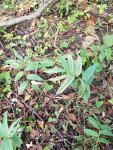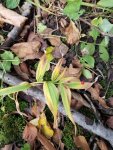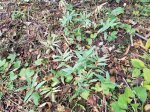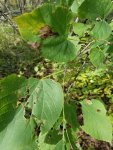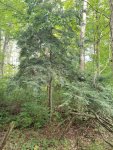
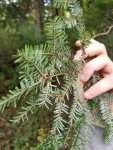
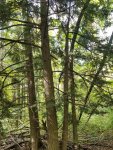
There were a LOT of Canadian Hemlock (Tsuga canadensis); old trees, young trees, one even uprooted but still holding on (will have a separate post for those two specific groups).

I’m sure there are at least 15+ specimens in that forest. I have never seen this many Canadian Hemlock trees in the wild before! All other specimens I’ve seen in the past have been either garden specimens (like in Cuddy Gardens) or were singular lonely specimens in the entire forest (that one swam forest walk a few years back).

It’s…. almost strange to think this tree is threatened by pests down south in the Appalachia.
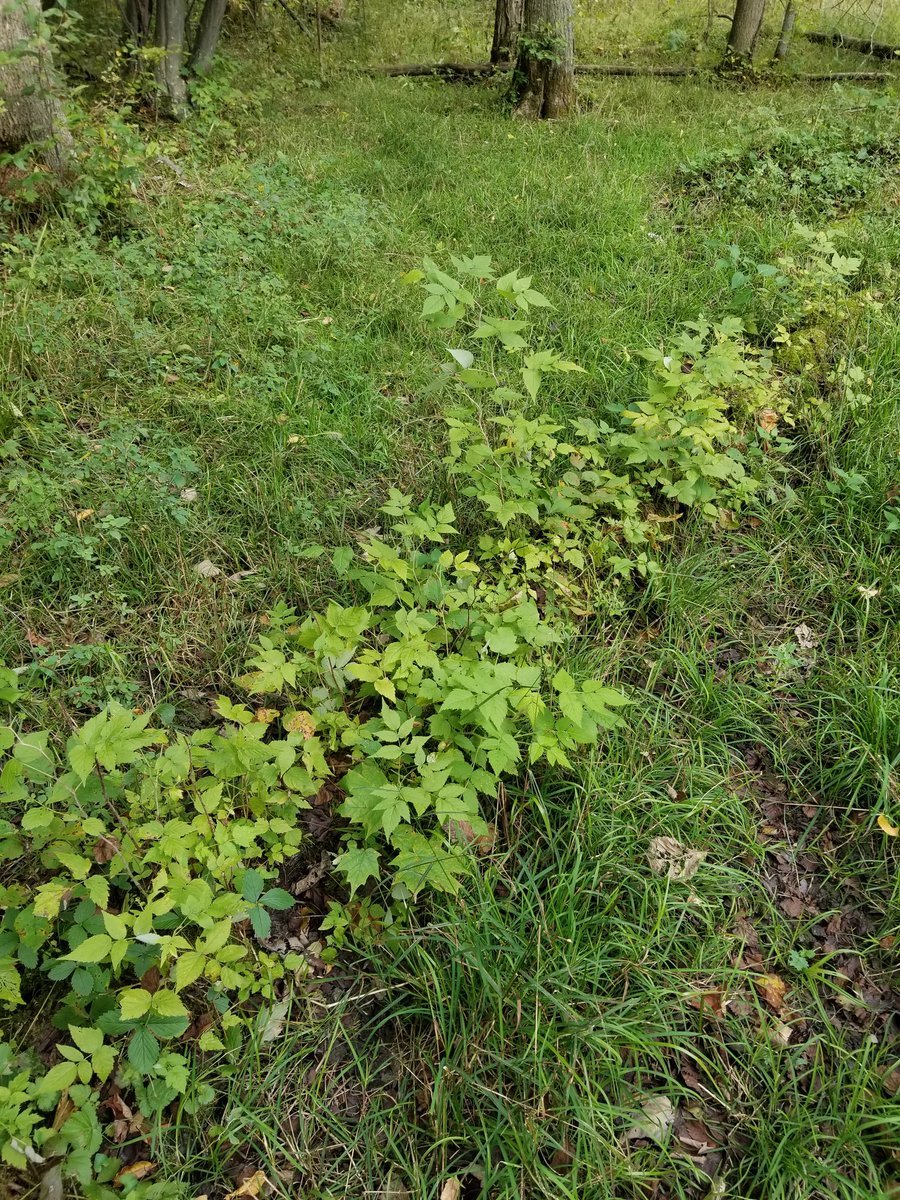
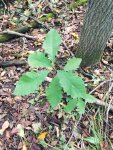
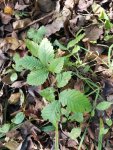
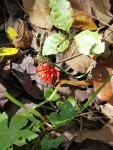
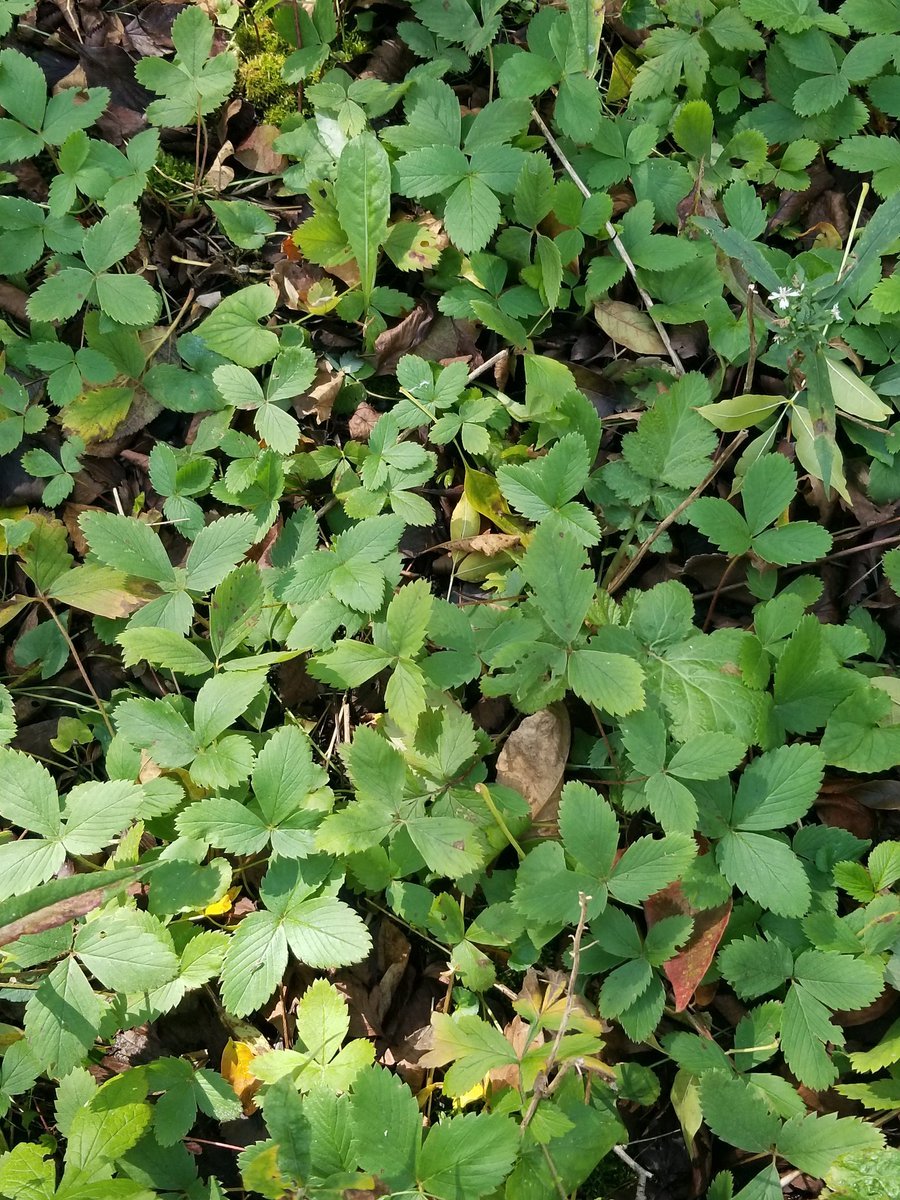
Y’know how weird it is to see areas of woodlot carpeted with primarily strawberry plants? Trippy it be.

I really want to go back to this forest during their flowering season and see if I can ID them as Wild strawberry (Fragaria virginiana) or Woodland strawberry (Fragaria vesca).

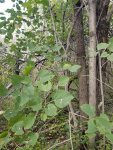
Both Virginia Creeper (Parthenocissus quinquefolia) and Poison Ivy Toxicodendron radicans) thrive in this forest. Though the Virginia Creeper is far scarcer, with only one location where I saw a population. Poison Ivy was hiding in almost any nook where you could have your guard down. Luckily climbing poison ivy I only saw in 3 different locations.

Interesting how the Virginia Creeper is ahead of the Poison Ivy for the autumn colours though.

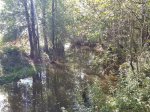
Same part of the creek photographed from the opposite sides of it (notice the trees with the distinctive curve from the base of their trunks). Basically discovered the south side of the creek would lead me away from the forest so had to trek ALL THE WAY back to the road the retrack my path from the north side.

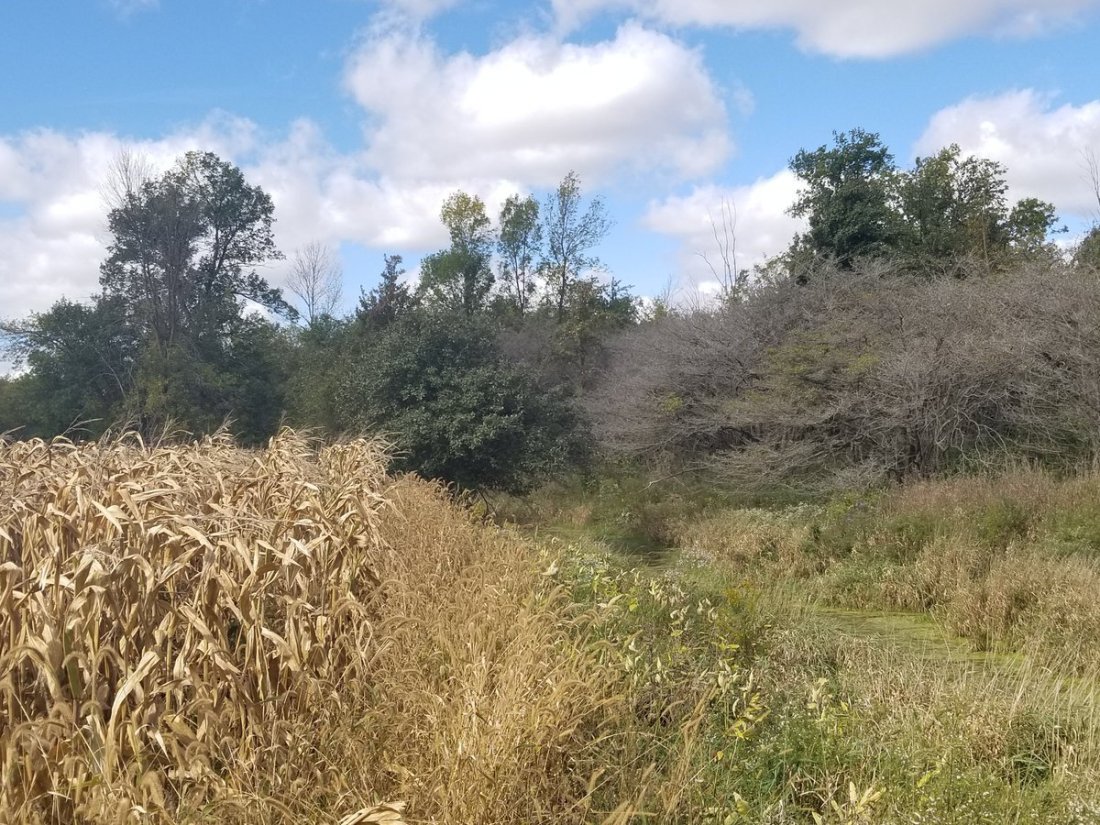
First pic I had taken from that woodland walk livetweeting (and where I chose THE WRONG SIDE OF THE CREEK).

This forest is well known for heavy poison ivy colonies (luckily encountered less than I expected) and is heavily protected by a thicket barrier of Hawthorns/Pears in the East/South side.