


Appalachian Spring, 2018, Volume Ten:
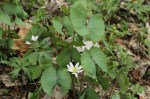
Twinleaf. Easily identified by its large, angel wing shaped leaves, twinleaf (Jeffersonia diphylla) is a perennial, clumping herb that prefers moist, calcareous soils, where it forms extensive colonies under the right conditions. A member of the buttercup family, the plant produces a single white blossom, which bears more than a passing resemblance to that of the bloodroot flower, in early spring; it goes to seed well before the tree canopy closes in. As with many other plants in Appalachia’s deciduous forests, twinleaf’s seeds are spread by ants. The plant also spreads asexually by means of a branching rhizome. Also known as Jeffersonia, in honor of the nation’s third president, and rheumatism root, the plant was widely used by Native Americans and traditional medicine practitioners to treat edema, kidney stones, and urinary tract infections, despite containing a poisonous alkaloid substance.
Extremely sensitive to environmental changes, Twinleaf is uncommon throughout its range
and is threatened or endangered in many places.
 Kihaku-Gato's Garden Blog (tumblr import)