Through out the rocky splash cliff communities in Appalachia grows the unique appalachian endemic cliff saxifrage, if you find this species there is a chance that other prostrate and or densely pubescent hydrophilic cliff dwelling species are also assembled there.
Common assemblages-
Round leaf drosera, film mosses, rock cliff mosses,
brook saxifrage, Oconee saxifrage, hornworts, many liverworts,
small-flowered alumroot, palmate false saxifrage, rock club mosses, lithophytic ferns, cliff foam flower, violets,
enchanter’s night-shade, meadow rue, mountain meadow rue, drooping sod, and many others.
Out of all the mints commonly found along temperate forest’s edge, when in bloom, this is perhaps the showiest. The upper leaves closest to the true inflorescence will begin to turn a lighter blue color and will be much more densely pubescent than other leaves with snow white hairs, acting as a floral bract. The bracts almost give the appearance that someone may have came by and spray painted the tips of the plant white.
Many members of Lamiaceae are wonderful nectar species, I.E. pretty much any Monarda sp. that you can think of; with that said, you can most likley associate this species with many different butterflies and a good amount of moth species.
Photographed along a no longer used logging right of way near Bison Way Trailhead, Red River Gorge, Kentucky.
It’s fairly rare in southern Ohio, or rather near Cincinnati, so when offered an opportunity to visit a site with these as well as a number of other fen species, a botanist has to do what a botanist has to do.
When I arrived to this site I couldn’t help myself to have a look around, unfortunately a pop up squall put us on a thunder alert and we had to evacuate the site. With that said I did take these two photos of a classic fen species, I also found myself gawking a bit at the sheer number of these goldenrod inhabiting one spot.
Photographed at one of Fernald Nature Preserve Annex Property Sites, in Fernald Nature Preserve and Federal Super Site, Ross, Ohio.
By the way, If you want to go birding and you are in the Cincinnati area, Go To Fernald.
Oh hey I have some Joe Pye Weed Seeds from 2015 and Blanket Flower from 2016.
………………………….. I wonder if they’d even stay viable for that long with such mediocre seed storage they’ve had. Well, there’s only one way to truly test them out.
me w aristolochia tomentosa
now that’s a fancy species in the seedbox O3O
I feel overwhelmed by the amount of seeds I still need to use. at the same time, if y’all got spare green milkweed, spider milkweed, clasping milkweed, blue bonnets, and other seeds send em’ my way please.
LMAO sadly only milkweeds I would have to offer would’ve been Swamp and Butterflyweed if I hadn’t deadheaded them like crazy to AVOID reseeding this late summer.
I can relate to the overwhelming amount of seeds; I’ve tallied myself 13 plant species to sow this autumn and/or spring, and outside of that I have super old seeds still in storage that may never get used (like the absurd amount of sweet william from 2015 and older, as well as tons of miscellaneous 2010 yr seed packets) and may have absolutely no viability at this point (like the Cercis).
I hope i can get the chance to sow all of these this fall, if not I’ll be bummed, it’s a lot of really cool stuff and I might just use an incubator and plug beds instead of the ol’ bag of dirt in the fridge trick. One day I hope i can post photos of a restored prairie habitat but idk. Do you have any good photos of your yard?
Currently I do not, though I’m not sure how I’d photograph it to begin with as its mangled chaos of gardenscape, lawnscape, the greenhouse and the orchard and windbreak trees. There’d be a vegetable garden too but… well, irl complications changed that part of the landscape fast lol.
Oh hey I have some Joe Pye Weed Seeds from 2015 and Blanket Flower from 2016.
………………………….. I wonder if they’d even stay viable for that long with such mediocre seed storage they’ve had. Well, there’s only one way to truly test them out.
me w aristolochia tomentosa
now that’s a fancy species in the seedbox O3O
I feel overwhelmed by the amount of seeds I still need to use. at the same time, if y’all got spare green milkweed, spider milkweed, clasping milkweed, blue bonnets, and other seeds send em’ my way please.
LMAO sadly only milkweeds I would have to offer would’ve been Swamp and Butterflyweed if I hadn’t deadheaded them like crazy to AVOID reseeding this late summer.
I can relate to the overwhelming amount of seeds; I’ve tallied myself 13 plant species to sow this autumn and/or spring, and outside of that I have super old seeds still in storage that may never get used (like the absurd amount of sweet william from 2015 and older, as well as tons of miscellaneous 2010 yr seed packets) and may have absolutely no viability at this point (like the Cercis).
Oh hey I have some Joe Pye Weed Seeds from 2015 and Blanket Flower from 2016.
………………………….. I wonder if they’d even stay viable for that long with such mediocre seed storage they’ve had. Well, there’s only one way to truly test them out.
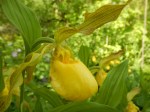
As far as I am concerned this species is incredibly variable by population and extremely widespread in North America. This orchid species inhabits relatively wet mesic woodland locations in pretty much all of forested North America. The flowers are showy and are fairly fragrant. As many of you know, Cypripedium species are quite the tricksters to pollinators. The flower attracts many different bees to it from local sites and each var. and odor seems to be unique enough to cause variance in pollinators. The pollinators themselves are attracted to the labellum primarily and then to a large nectarine site toward the back of the lip that offers no reward to the pollinator. Once at this site the pollinator has two exit lines separated by the stigmatic site of the column. Each separate exit has two seperate pollinia(pollensack) sites on each sides directly above the stigmatic part of the column. If the pollinator already has a pollinia attached to it’s side and exits in a similar direction the pollinator potentially will pollinate the orchid. The pollinia are attached to the column’s flap by a translator arm, which is quite sticky. The second part of the orchid’s trick is to give the pollinator the impression that the nectar site was just used up for that current flower, which explains why the pollinator might still head to another flower regardless of there being no reward at the current flower.
This species has the potential to be pollinated by the following genera: Ceratina,
Eristalis, Apis, Agapostemon,
Lasioglossum, Osmia and
Andrena(potentially others, these are just the well known genera).
If you’re living in Ohio and want to know more about what Orchids are around you, check out: Orchids OHIO by Andrew Lane Gibson or google your local Orchid Society.



 Kihaku-Gato's Garden Blog (tumblr import)