
Puya berteroana or Turquoise Puya is a terrestrial Bromeliad from the mountains of Chile. It forms a rosette of silvery-green leaves about 3-4 feet tall and wide. Over the years, it forms a large colony of pups. The leaves are spiny, but the flower stalks themselves are soft, and the blossoms are silky-smooth. Birds like to sit on the outward-pointing tips and drink the nectar out of the blooms.
Tag: tangledwing


Snowdrops already in early bloom. The unseasonably warm weather has seen wild flowers burst into bloom months ahead of schedule.Photograph: Matt Cardy/Getty Images
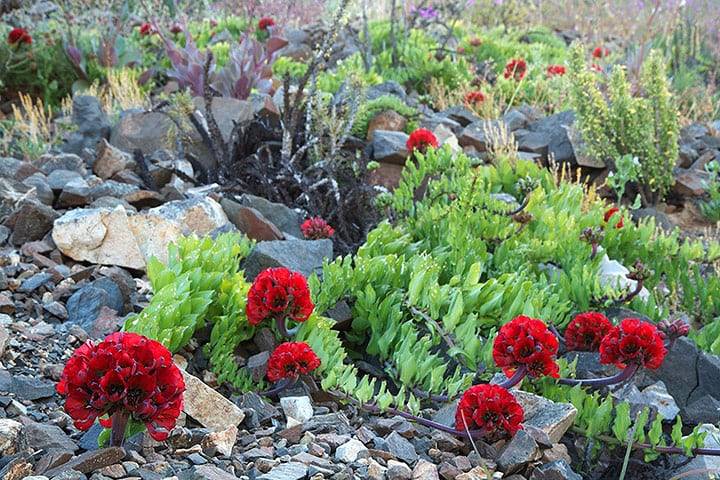
Flowers bloom on the desert in the Llanos de Challe national park, at the doors of the Atacama desert, USA. An exceptional year with a 50 mm rainfall helped the more than 200 species of autochthonous flowers, which don’t grow elsewhere, 14 of them in risk of extinction, to spread out a colorful blanket over the world’s driest desert
Photograph: Antoine Lassagne/AFP/Getty Images

Virginia rose, common wild rose or prairie rose (Rosa virginiana) is a woody perennial in the rose family native to eastern North America, where it is the most common wild rose.The stems are covered in numerous hooked prickles.


Yellow rattle, little yellow rattle, hayrattle or cockscomb (Rhinanthus minor) is a flowering plant in the genus Rhinanthus in the family Orobanchaceae, native to Europe and northern North America. It is a hemi-parasitic herbaceous annual plant that gains some of its nutrients from the roots of neighbouring plants.
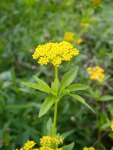
Golden alexanders or golden zizia (Zizia aurea) is a flowering perennial forb of the carrot family (Apiaceae). Each flower produces a single three to four millimeter long, oblong, green fruit capsule. These fruits change color as the year goes on. Each one contains a brown seed. In the fall both the leaves and the fruit turn purple.
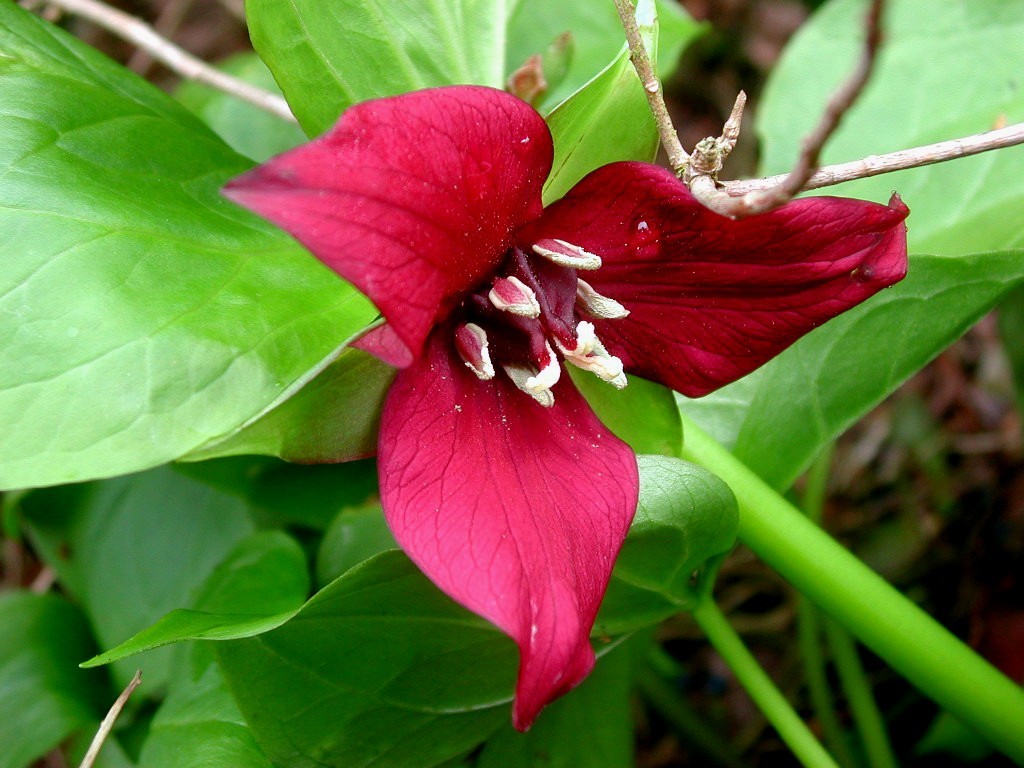
Red trillium, wake-robin, purple trillium, Beth root, or stinking Benjamin (Trillium erectum). It is a spring ephemeral, an herbaceous perennial whose life-cycle is synchronised with that of the deciduous forests where it lives.
A red-brown grasshopper on a yellow flower in Canada
Photograph: Mircea Costina/Alamy.
Catnip, catswort, and catmint (Nepeta cataria) is a species of the genus Nepeta in the family Lamiaceae, native to southern and eastern Europe, the Middle East, central Asia, and parts of China. It is widely naturalized in northern Europe, New Zealand, and North America.The plant is drought-tolerant and deer-resistant. It can be a repellent for certain insects, including aphids and squash bugs.
Early blooming wild primrose in Victoria Park, Bath, UK. Last week we wrongly captioned a picture of winter flowering viburnum as cherry blossom.
Photograph: Ben Birchall/PA
 Kihaku-Gato's Garden Blog (tumblr import)