ruthbancroftgarden:

Ruschia sp.

Ruschia is the largest genus in the Ice Plant Family (Aizoaceae), with an extensive distribution in southern Africa. This one was grown from seed collected in South Africa, but it does not match any of the species we have seen in cultivation, and its name remains undetermined. It forms a small shrub with chubby rounded leaves and violet-pink flowers in late autumn.

-Brian

ruthbancroftgarden:

Cyrtanthus obliquus and Cyrtanthus herrei

Cyrtanthus belongs to the Amaryllis Family (Amaryllidaceae), with many species present in southern Africa. Mostly they have tubular flowers which are on the small side, but a few have large nodding flowers, including Cyrtanthus obliquus and Cyrtanthus herrei. We do not usually see them in flower simultaneously, since C. obliquus is summer-flowering (mostly June and July here at the Ruth Bancroft Garden in California), while C. herrei is autumn-flowering. However, this year one of our obliquus plants decided to re-flower in the autumn, so this affords an opportunity to cross the two species and see what comes from it. Since C. obliquus comes from the summer-rainfall area, while C. herrei is from the winter-rainfall area, we might hope that the seedlings will happily grow all year long.

-Brian

ruthbancroftgarden:

Crassula tecta

The genus Crassula is a large one, but many of the species in it are quite small. This is certainly true of Crassula tecta, from South Africa’s Little Karoo region. Its leaves are very chubby and encrusted with short hairs that give it an almost crystalline look. The hairs extend all the way up the diminutive flower stalk, which is topped with a cluster of little white flowers. Crassula belongs to the Stonecrop Family (Crassulaceae).

-Brian

ruthbancroftgarden:

Mammillaria geminispina

This species of Mammillaria, sometimes called the “twin-spined Mammillaria”, is renowned for its ultra-white spines and its tendency to form large clumps. It produces most of its little magenta flowers in the fall, but these are sparser than those of many other Mammillaria species. From the state of Hidalgo in east-central Mexico.

-Brian

ruthbancroftgarden:

Argyroderma delaetii

Argyrodermas belong to the Ice Plant Family (Aizoaceae), and like most members of the family they are native to southern Africa. In particular, they favor quartz-fields in a dry area known as the Knersvlakte in western South Africa. Argyroderma delaetii is variable in flower color, but our pair pictured here have white flowers.

-Brian

ruthbancroftgarden:

Aloe whitcombei

Aloe whitcombei is one of the few species in the genus native to Oman, in the eastern part of the Arabian Peninsula. It grows at the top of sheer cliffs overlooking the Indian Ocean, and can be hard to see without rappelling. Fortunately, it is not difficult to grow as a potted plant, and eventually it will reward you with short flower stalks which emerge from between the leaves and hook downward at the tip. At the bud stage, the flowers are pale yellow with striped green tips, but they turn white at maturity.

-Brian

ruthbancroftgarden:

Mammillaria hahniana

The genus Mammillaria is one of the largest groups in the Cactus Family (Cactaceae), with the majority native to Mexico. Often, their flowers come in a ring around the top of the stem, as can be seen here. Mammillaria hahniana is quite variable in its spines and wool, with some widely-grown forms having a much shaggier appearance than the plant pictured. It is native to east-central Mexico.

-Brian

ruthbancroftgarden:

Trichocereus santaensis

This tall columnar cactus is from Peru, and it is very similar to the well-known San Pedro Cactus (Trichocereus pachanoi). Some botanists consider it to be just a form of that species with longer spines. In any case, both plants have large white flowers with hairy bases. The hair is still visible on the fruit after the flower has gone by. For a while, Trichocereus was merged into Echinopsis, but now it is once again accepted as a separate genus.

-Brian

ruthbancroftgarden:

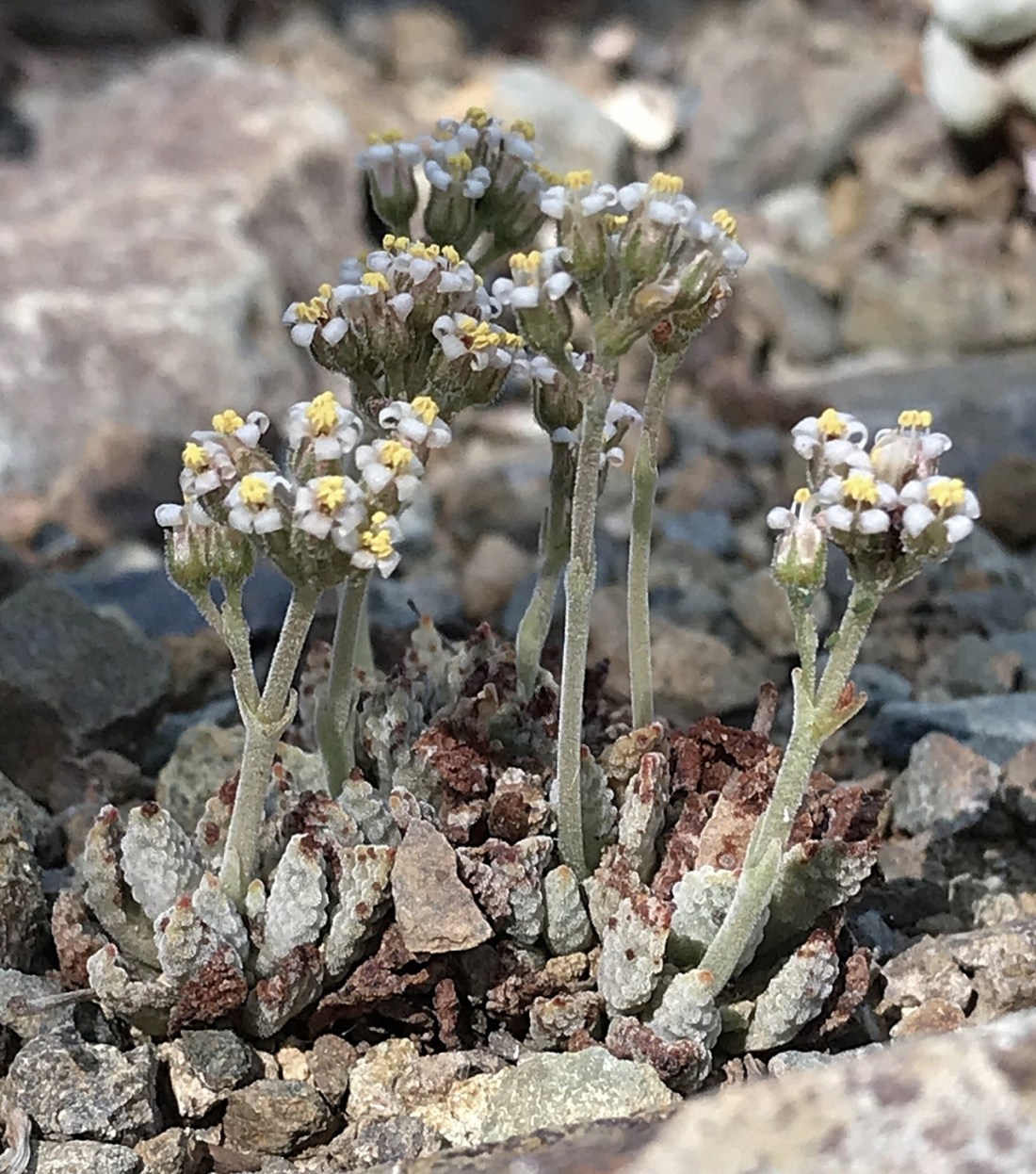
Crassula ausensis ssp. titanopsis

Crassula is a very large genus in the Stonecrop Family (Crassulaceae), and Crassula ausensis ssp. titanopsis, pictured here, is a tiny species from the lower Orange River, which forms the border between Namibia and South Africa. It is notable for the very rough crystalline texture of the leaves. Even with the flowers, this plant is only about 3 cm tall.

-Brian

ruthbancroftgarden:

Aloe falcata

While Aloe falcata is generally a summer-blooming species, our plant has waited until autumn to come into flower. It is native to the winter-rainfall region in western South Africa, and can be found near the town of Vanrynsdorp, as well as farther east in the Tanqua Karoo. It is related to Aloe claviflora, but this has denser spikes of flowers in the late winter, and it grows farther inland outside of the winter-rainfall area.

-Brian