regnum-plantae:

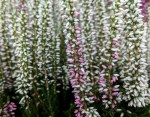
Achillea millefolium ‘Desert Eve Terracotta’, Asteraceae

To conclude the triptych of flowers in the orange gradient I’ve been writing about in the past few months, my favourite cultivar of yarrow we had at the garden centre over the summer period follows Agastache ‘Apricot Sprite’ and Digitalis ‘Goldcrest’. This beautiful perennial is part of the recently introduced ‘Desert Eve’ series, valuable for its compact habit, long flowering season -which starts earlier than for most other cultivars of yarrow- and its excellent attractiveness to wildlife. Hoverflies and flies seem to particularly love it, possibly due to the less than agreeable scent the flowers emit, especially during very warm days -my colleagues at the checkout asked me to stop adding yarrow to a vase placed next to the till where I usually put any flowers whose stem happens to break during handling. The feathery foliage, however, is pleasantly fragrant aside from providing an excellent contrast to the flat flower heads.

Selected garden cultivars are generally not used as medicinal plants, so I use the white, wild counterpart of this showy yarrow to prepare an oil I use on my hands at work during winter, when they are constantly wet and frozen and start cracking badly.            
regnum-plantae:

Mosaicism, Fasciation, Proliferation…Oddities! Part 2

A month ago I shared the first series of photos of oddities I happen to see at work in the garden centre: when you handle hundreds of individuals of the same species/cultivar, you’re bound to see interesting abnormalities. Finding one is always the highlight of my day and I make sure to show everybody.  

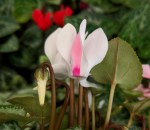
– Mosaicism in Cyclamen, seems quite rare

– Fasciated Rudbeckia, not that uncommon

– Mosaicism in Hebe, again, quite rare 

– Proliferation in Scabiosa, relatively common 

– Funnel-shaped ray florets in Gallardia, a naturally occurring trait, but generally not present in the cultivar ‘Mesa Peach’  

– Mosaicism? in Calluna, rare

– Fasciated Primula, not uncommon when temperatures fluctuate

– 7-petaled Cyclamen, rare! I’ve seen a 6-petaled one before

Now check the equally odd Part 1 for more!

regnum-plantae:

The Whangie

This very peculiar rocky outcrop in the Kilpatrick Hills, NW of Glasgow, is one of the major attractions in the area and looks like it’s straight out of a fantasy novel. The long, narrow and winded chasm of glacial origin which separates the steep, lichen-encrusted rock walls reminded me indeed of a certain passage in the Coldfire Trilogy by Celia S. Friedman: I couldn’t help but looking up at the slice of sky, and then behind me, waiting to spot odd scaly creatures crawling down threateningly on us.  

That aside, the place is as idyllic as a place can be, and the gorgeous sunny day helped painting it like a dream. Whether you’re into field botany, geology or simply hillwalking, I would certainly recommend a visit.

Oh, and if you didn’t get the subtle hint from the implicit message in the top photo, follow me for plant and nature-related original content 😉 

regnum-plantae:

Raising Pieris brassicae

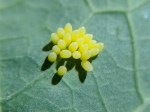
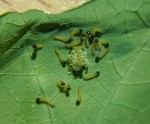
When I sat one of the RHS horticulture exams last February I had to describe and illustrate the life cycle of the large white, a common pest of vegetables in the Brassicaceae family. Although I had to learn it from books, I had never had a chance to observe all its stages in person so, when I spotted one of these common butterflies taking shelter and depositing her eggs under the leaves of the nasturtium (Tropaleum majus) in my window boxes, I took it upon myself to try and raise them to adulthood. I had never raised butterflies before, so I was particularly excited. 

The tiny yellow eggs hatched in four days and the caterpillars started feeding voraciously on the fresh nasturtium leaves I was providing daily. They grew rapidly and soon started showing their typical mottled yellow/black/green colouration, which is supposed to discourage predators and warn them of their foul taste, acquired due to the mustard oil present in their preferred plants. After two weeks they started pupating: watching the pupae emerge from the skin of the last instar was incredible and something I had never seen before. The soft pupae, already showing the future wing structure, began hardening up and the first butterflies emerged after ten days. They seemed to wait until I wasn’t looking to pop out, so I only caught one halfway through the process and it happened so quickly I couldn’t take a photo. Last night, not long before sunset, I finally released all those that were ready to fly, exactly a month after the eggs were laid. Some immediately flew away, others seemed a bit torpid, probably due to the temperature excursion, so I left them in the shelter of some tall Himalayan balsam (Impatiens glandulifera), hoping for the best. 

I said this before when I raised common frogs (Rana temporaria) last year: animal metamorphosis is an unbelievable natural process which is absolutely worth seeing with your own eyes, I have learnt so much and I can’t wait to raise butterflies again!  

regnum-plantae:

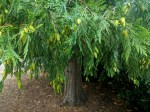
Calocedrus decurrens, Cupressaceae

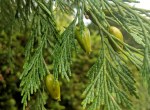
Remember the post I wrote right after coming back from Italy last month, and the photos of that beautiful and ancient manor house I added? Right at the entrance of that beautiful place is where I found this interesting conifer, and after reading about it, it makes sense I hadn’t recognised it as something familiar. The incense cedar is a large tree native to western North America and is generally found in Europe mostly as a free-standing specimen in association with old, stately private homes and urban landscaping, so you don’t generally come across it in the wilderness. 

Its common name refers to the aromatic scent emitted by the evergreen scale-like foliage when crushed -not a huge surprise, many conifers are interestingly scented- and its fissured, peeling bark is an added attractive. The female cones were probably what caught my attention right away: their shape is quite particular and looking at photos of how they split open when mature and dry I realised I had definitely seen them before somewhere, they’re unique and hard to forget. I really need to write more about conifers, they are definitely something I’ve overlooked in the past but the more I learn about them, the more I fall in love!

regnum-plantae:

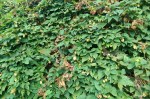
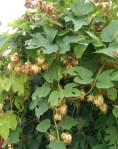
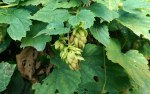
Humulus lupulus, Cannabaceae

Common hop is one of the most typical native climbing plants growing in wild hedgerows around my hometown in northern Italy. I love to rub the resinous female flower cones -known as hops– between my fingers when I walk past one of these plants, and smell the savoury aromatic oils, which are very persistent!

These oils are what make this plant an important crop for the brewing industry, as they are essential to give most beers the flavour we are used to. In certain parts of nothern Italy the young shoots are cooked and eaten pretty much like asparagus. I’ve never tried them, but I’ve heard from people around my grandparents’ age that they were popular when they were kids.  

The cultivar ‘Aureus’, with yellow or bright green leaves, is cultivated as an ornamental in the UK. 

regnum-plantae:

regnum-plantae:

Sedum Acre, Crassulaceae

Known in the UK as Biting Stonecrop due to the mildly irritating fluid contained in its leaves. I found it growing at an elevation of about 180m, on the north stone wall of a ruined farm near the Finglen Burn, one of the many large streams on the southern side of the Campsie Fells, a volcanic range of hills in central Scotland.

Semi-visible in the photos, the space between the walls was almost entirely colonised by Urtica dioica, as this plant thrives in the nitrogen-rich soil of long-abandoned human sites.

This was the first plant ID I posted on my blog, it all started with a tiny succulent! I also have a small bit of the very plant in the bottom photo growing in a pot on my windowsill. 

regnum-plantae:

Phyllostachys sp., Poaceae

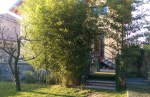
When my uncle renovated a very old property with a small plot of land on the other side of an irrigation canal, he found the overgrown garden infested with bamboo rhizomes. He eventually managed to bring it under control, and it’s now growing into a green screen separating the house and the garden, but also into a tunnel which envelops the small bridge over the water. 

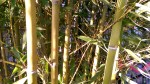
Judging by the groove on each segment of the stem, I identified it as a species within the Phyllostachys genus, but it’s quite hard to pinpoint the exact one from the photos I’ve taken in December. Most Phyllostachys species are native to central and southern China, but are naturalised in many other areas of the world and include some of the most widely recognised bamboos. P. edulis, for example, produces extremely fast growing edible shoots (which require preparation to remove toxins) and is the main source of fiber for the highly controversial bamboo-derived rayon textile market.

Bamboo has proved fundamental for some cultures as an abundant and fast-growing plant resource, but a garden can benefit from its presence too if measures are taken to prevent it from spreading and taking over the place. It can be used to create narrow, dense windbreak screens to protect less hardy plants from cold winds. It continuously produces building and crafting material with great physical properties and it can even be shaped as it grows to assume the section or profile required, with dramatically quicker results than in normal tree shaping. The stems can also be burnt to create a very absorbent charcoal useful as a soil amendment and the bio-mass not needed can be composted: it might take a while, but the process is much faster if the stems are first crushed or shredded. Lastly, we can’t ignore the ornamental value of a bamboo thicket, with its feathery silhouette and airy appearance often associated with bright hues of green and yellow and straight or angled internodes.

regnum-plantae:

Galanthus nivalis, Amaryllidaceae

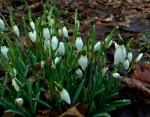
While some unexpected bright sunlight melts away the first snow, fallen two days before in Glasgow, the snowdrop makes its sudden appearance, blooming out of the leaf litter. 

This small, bulbous plant is native to much of Europe, including my homeland Italy, where it’s fittingly called bucaneve, ‘snowpiercer’, and naturalised in parts of the US. Here in Scotland, where it was introduced, it’s quite common to see it popping up in parks, where sometimes it forms large white carpets.

Given it was in bloom before half January, this is probably an early-flowering cultivar, as the common snowdrop generally flowers some time later, in February. 

regnum-plantae:

Leucadendron gandogeri, Proteaceae

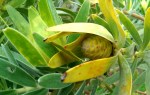
This contorted, large shrub with curious features is known as the cone-bush and is endemic to South Africa, where it is one of the Proteaceae characteristic of the fynbos, or belts of shrubby vegetation or heath growing in a Mediterranean climate in the south-western part of the country, a winter rainfall area.

In its natural habitat, the large yellow inflorescences of this plant are visited and pollinated by beetles, while other species of cone-bush rely on rodents, birds or simply the wind. The resulting woody infrutescence the plant’s common name refers to is similar to a cone and contains numerous seeds, which are dispersed only after fire has scorched it. This ensure the new seedlings will have the best chances at getting established after a wildfire has destroyed the mother plant and the surrounding shrubbery.

Different species of Leucadendron are available as ornamental shrubs or small trees and could fit well in a rocky Mediterranean garden, preferring sandy acidic soils and being drought tolerant when established.   

More information and photos of Leucadendron species here.

Photos taken at Glasgow Botanic Gardens