kihaku-gato:

icr have I ever done a ramble post about OCs in swimsuits that suit their styles or what???

Fuck it if I’m stuck indoors from the ungodly heat I mind as well. HERE WE GO SWIMSUIT OC THOUGHTS UNDER THE CUT (cause I know ya’ll ain’t here for a powerpoint on fictional characters choosing their preferred swimwear. Hence, under the cut).

Also footnote from future Gato- GODDAMNIT I SHOULD’VE CONSIDERED OLD/EDWARDIAN-ESQUE SWIMSUITS for more variety but too freaking late let’s go

IF OCs WERE TO CHOOSE SWIMSUITS

Terra and Abbey-

image

I shockingly couldn’t find a universal term for a swimsuit that has maximum coverage (Diver’s swimsuit and Muslim swimsuit were as close as it got). Abbey sunburns super easily and Terra hates most skin exposure in general, so both would be very similar in swimsuit type (Terra’s could potentially have bare arms but that’s up for debate) even if the colouring/patterning would be different. Terra’s would be minimalistic not unlike the example above, with one singular dark colour with a bold colour (or bold stripes) for the sleeves/leggings, maybe a black/maroon base with lighter red/black patterns. Abbey’s would be patterned in such a way as to mimic the straps of fancier/skimpier swimsuits, with fairly bold colours (Hoepian Abbey is limited by her pastel base colours, however AU Abbeys would probably seek black/white/red gothic colour schemes). Abbey’s potentially would have neck/head coverage akin to Muslim swimsuits (cause yet again, Abbey sunburns easily, she can use all the coverage she can get). Terra would probably still wear a jacket over her swimsuit or something.

Harriet

image

I have thought/rambled about Harriet’s swimsuit of choice before, and since then the options/thoughts of what she’d choose has diversified since

(while I’ve chosen the three above, I could just as easily picture Harriet going for girlier/dress-like swimsuits if the mood were to strike her). Out of my OCs she’s the one I could see having a diverse choice. Casual bikini with shorts on a super casual day, a Diver’s swimsuit when doing salvage/adventures in deeper waters, or a racing swimsuit for competitive water-terrained duels. Patterns/colours in these examples aren’t too far off from what Harriet would choose. Pinks/reds/white/blacks/blues are all par for the course for her. While not perhaps my best work I have tried drawing Harriet in canonical swimwear before.

Kayla

image

Kayla’s for me was a bit more of a struggle to find examples for, weirdly enough, as I can imagine what she’d wear but finding a visual example is another challenge entirely. Hers would probably be a combination of these three. Floral print would be Kayla’s thing.

One time I drew Kayla in a bikini but A- that was before Kayla’s vast body redesign and B- we don’t talk about that drawing.

Anne

image

????  Maybe? I haven’t had as much time to think about Anne in anything beyond her default gear so it never crossed my mind that much.

Demauria

image

Demauria’s rivals Kayla’s swimsuit for difficulty of finding “the one” swimsuit and instead liking the characteristics of several different ones. (you know how many skimpy af swimsuits I had to through for Goth/Punk swimsuits? it’s madness). While many of us (@shiroi-ttebayo and Kayla in particular) would probably wish for Demauria to be in something hella frilly/cute, Dema would probably beg to differ lol. Skeleton/skull print, maybe longsleeved and/or with a skirt. One piece regardless. Like Kayla I’ve drawn Demauria in a swimsuit before but yet again we don’t talk about that drawing!!!

Oh and small note since it didn’t cross my mind till now; Dema would also probably have one of those swimsuits that has folds/frills jutting out of the chest area. Maybe.

Riivar

……………….. actually my brain has fried in this point so tbh idfk lol. Something stylish, expensive, with straps, maybe a skirt.

I feel pain for anyone who has to ID Trilliums for a living though. Many of them can look so damn similar, google tends to overlap images for different species as if they’re identical so you’re out of luck using that as a reference, and without context of natural geography along with other visual details you’re pretty much screwed over unless you know very very subtle anatomical details (if you’re lucky you get very obvious details like the colour of the ovum before v after pollination, but even that can only get you so far).

Take “White Trillium”  for example; Most of you upon hearing that name probably imagined Trillium grandiflorum. However, counting that species there are actually at least 15 kinds of white trillium. 2 of which are Sessile form, 4 of which are Asian species (yes Asia has a small select set of Trillium species). Not going to share images cause as I said, google isn’t dependable for all of them but among the species of white trillium there are (*sound of me turning the pages of my old Trilliums book before I begin*);

Among non-sessile NA species

  • Trillium flexipes
  • Trillium erectum forma album
  • Trillium grandiflorum
  • Trillium ovatum
  • Trillium cernuum
  • Trillium nivale
  • Trillium persistens
  • Trillium rivale
  • Trillium rugelii
  • Trillium simile

Among sessile NA species

  • Trillium albidium
  • Trillium parviflorum

Among Asian species

  • Trillium camschatcense
  • Trillium hagae
  • Trillium tschonoskii

Some genera like Trillium can be so goddamn messy augh I haven’t even included hybrids and stuff. It’s nonetheless amazing.

anotherconfusedfuck:

fueled-by-nightcore:

unrepentantwarriorpriest:

I can respect that.

this is the realest reason to use one handed weapons.

Here’s why all of you who have Skyrim for PC should ABSOLUTELY install the Inigo follower mod, even if it’s your only mod. It’s the cat man saying the line in this screenshot, and he has tons of equally wonderful lines just like this.

This fucker has thousands of lines of dialogue. He is the only character
in the game, modded or otherwise, that feels like an actual character
and not a cardboard cutout complaining about the cold.

And yes, he is fully voiced.

Some things to know about Inigo

  • He’s openly and vocally anti-racism, and he will make sure you know it.

  • He’s a recovered skooma addict that survived a suicide attempt and travels with you to help himself find redemption for his past.
  • He will be concerned for you if you’re carrying skooma in your inventory
  • If you sit with him in an inn and know him well enough, he will let you vent to him about being depressed, and he will do his best to hear you out and help you feel better.
  • He has a friend he carries with him everywhere named Mr. Dragonfly. If Mr. Dragonfly is in his inventory, he will occasionally tell you what he’s thinking.
  • If Mr. Dragonfly is not with him, he will be sad and ask if he can have him back. He’ll be sure to let you know that it’s not personal, but he and Mr. Dragonfly are really good friends.
  • Give him back his dragonfly friend you monster.
  • he WONT TALK TO YOU WHILE YOU’RE SNEAKING

tl;dr go download Inigo and you’ll never use another follower again

Before I super-ramble I just want to say that thanks to a friend of mine I know that Inigo’s mod is ACTUALLY AVAILABLE FOR SKYRIM USERS OUTSIDE OF PC (idr which console but I know a friend who does not have skyrim for PC was able to install Inigo’s mod, and apparently has had as much of a colourful experience as I’ve had through him).

As one who was wild with skyrim mods back in the days of my old PC (*coughs* still need to somehow relearn out how to set up mod managers etc., again before I can do it on the new PC), if there is one mod I couldn’t possible go without, it’d be Inigo. He livens the Skyrim experience so much more, both towards other npcs (it’s a hilarious ride if you have something like a multiple followers mod installed) and the actual environment, to even certain quests. I don’t want to spoil too much of the experience with him but I can say additionally;

  • He has one of the best AIs of any follower or follower mod of skyrim, to the point there are even coded workarounds/fixes in his code for those times where skyrim followers tend derp out (you know the ones I mean; where they get overly aggressive or somehow did not come with you in fast travel or got stuck etc.). He even has the ability to avoid traps to not set them off!
  • He is extremely endearing- wait that’s not good enough for you more morally darker players? HIS MORAL COMPASS ACTUALLY WILL ROLL WITH YOU; you wanna be a thief, a mischeifmaker? Part of the Brotherhood perhaps? Or are a little baby like me and want to stick to being as morally good as you can despite skyrim’s nature? Inigo will likely roll with it.
  • IT IS NO EXAGGERATION THAT HE HAS A LOT OF AVAILABLE DIALOGUE AND LINES. You know yourself with skyrim that dialogue tends to be limited after a point and normally tends to loop around a lot. Inigo’s variety of dialogue makes this much more of a rarity when it comes to him; you can do different playthroughs and get sometimes very different lines you may have not have gotten in previous playthroughs with him, even if there are patterns in some. While you can ask him to talk less, you may get the best of experiences if you let him talk a lot and pick his brain whenever you’re resting at camp or in a tavern. Trust me, he has a lot of amusing opinions if you decide to chat with him here and there. Also his battle dialogue is much more entertaining than the vanilla “NOW you’ll pay” and “HYAS” and it will definitely either make you sputter from the humor or just fire you up in the fight.
  • He has his own little quest. Ok maybe not the best of motivations/points for some of you, but said quest gives you some advantages after the completion as well as gives you a bit more about his past if you decide to dig during said quest. His quest also can be postponed when it triggers if for some reason you are busy with something else ingame.

I cannot recommend the Inigo mod enough. If you need a freshen up in the game or just get a really hard-to-forget experience in skyrim, then Inigo may be your Kajit for the job.

gallusrostromegalus:

jhaernyl:

botanyshitposts:

spirit-of-science:

thebloggerbloggerfun:

teafortrouble:

eteo:

fall-for-nothing:

trickster-eridan:

buttpilgrim:

scientificperfection:

kittiesinthemorning:

I just don’t understand how this happened. But here’s a picture of a lemon from my backyard

WHAT THE EVERLOVING FUCK

when life gives yoǘ̻̬͓͎̣̟̩̦͢ ͪ̂̀̆҉̳̘̝̺̀l͇̬̹̞̻̥͕̥̗̒̎ͩ̋ͥ͆e͙̭̭̠̣̠̊́ͩ̂̓̀ṃ̛̍̂͛̈̏o̠̪̪ͤ͗͘n̵͉̣ͭͧ̿ͧ͛̀s̷̠͑ͬͫͦ̅͡ ̸͐ͤ͘҉̦̺M̰̹͙͇ͮ̉ͫͅȦ̻̔̅̇̑ͭ͛͋͘K̠̻̫̤̇̀ͥE͂ͪ͏̱̤͚͕ ̞͔̜̬̑ͯ͑͢ͅŞ͔̦̩̳̣̖ͮ͊ͨA͈̓͂̈́̀̀̚͘C̡̠̟͉ͪ͆̔ͤ͂ͪR̬͙͕ͪ̀͠Ĩ̵̖͚̑̊̓́F͎͕̄Iͬͧ̀̂̑ͪ͟͏̴̪̤ͅC̢̰̝͓̗͛ͬ̔̍̓́́̚̚Ḙ̶̠̰̳̩̳̊ͭͮ̇̇̚̕S̻͖̣̰̒̈͟

it’s back

Satan lemon

every villain is lemons

And finally, dear listeners, a reminder; several concerned citizens have brought to the city’s attention an irregularity surrounding this summer’s citrus harvest. City council would like to remind all enterprising fruit pickers to exercise reasonable caution when acquiring these fruits. Grasp the fruit firmly around its circumference, pull slowly but steadily to avoid damaging the tree, and under no circumstances heed its demands of you. Do not acknowledge or obey the depraved whisperings of the demon fruit.

And now: The Weather.

This kind of looks like a Buddha’s hand to me

they’re a type of Citron, a citrus closely related to lemons. I wonder if whatever causes that twistedness in Buddha’s hands is present but dormant/recessive in other citruses?

@botanyshitposts do you know about this?

a lot of people having been messaging me about this, and honestly i had no idea that Buddha’s hands existed and it totally seems likely to me??? like honestly that seems like a really plausible explanation, especially because when we look at the demon fruit, the twisty ‘arms’ are going off in all different directions when the only place i can see a twisty arm happening on a lemon is on the top. like if the fruit is developing from the original growth point into a body then why are the offshoots developing the opposite way, from a body into a twisty thing? when in a Buddha’s hand, it totally makes sense because the twisty things are growing outward anyway. 

im no pomologist but the similarities in the growth patterns really do reflect in The Demon Fruit. 

@gallusrostromegalus

WAIT I KNOW THIS ONE!

The short version is that Citrus is a slutty, slutty genus of plants that can knock up pretty much any other member of the genus and uh… it’s mots recent relative as of 7 million years ago, becuase why not. Usually that makes for tasty children like tangerines and whatnot, but sometimes Weird Shit happens.

All modern citrus are descended from Mandrin oranges, Pumelos and Etrogs, the latter being closest to lemons and which looks like this:

It’s big and lumpy and mostly pith but also tasty as hell so Ye Ancient Malay Archipeligo Orchard Guy gets to breeding these for more tasty innards, presumable inventing lemonade in the process.  YAMAOG also finds out that it’s REALLY easy to seriously mess with the overall appearence of the fruit of these very inbred etrogs, and starts breeding all kinds of nonsense, like Bhudda’s palms, Modern Lemons and Grapefruit.

YAMAOG also noticed that in addition to the occasional ugly inbred mule child, you can also get really strange looking fruit if the tree gets sick, is malnourished, if any part of the flower is damaged, or if the weather just sucks that year.  In addition to being a Major Slut, Citrus is also a Fussy Bitch.

Looking at the Demon Fruit, my best guesses are

  1. If you’ve had weird-shaped fruits off that tree before, you might have a very strange hybrid tree like the dachsund-pitbull one of my neighbors owns.
  2. If it’s only the one fruit, and your tree is producing otherwise normal lemons, that particular flower or branch took some kind of damage or had a viral infection, which fucked up all the hormones and hence your lemon has gone all Ending-Of-Akira on you.

GOOD NEWS FOR BOTH SCENARIOS: unless the fruit looks like it’s actually rotting, it’s safe to eat!  weird fruit shapes in lemons pretty much never makes them dangerous, just maybe a bit more tart than usual.

Enjoy a nice glass of demonfruit juice!

cannibalcoalition:

welcomedmachine:

botanyshitposts:

botanyshitposts:

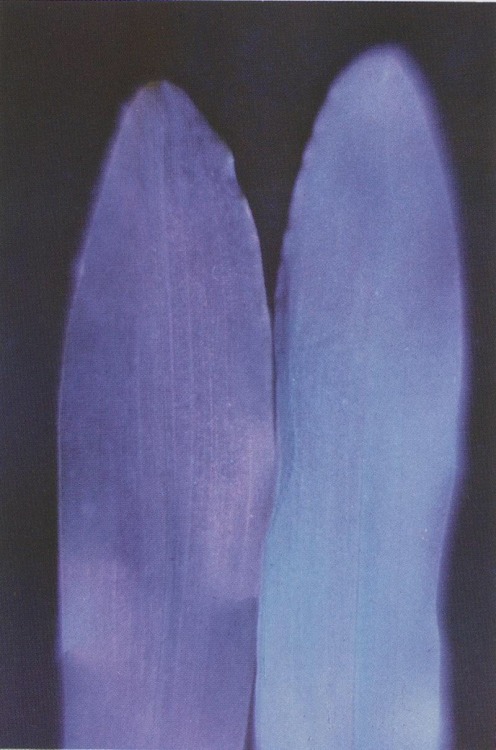
ok like y’all know I love plant mutations and love reading about them but a few days ago I was reading a book on corn mutants at 4am and I found out about glow corn and still haven’t recovered

1. this isn’t gmo. they didn’t intend for this to light up under UV light. it’s like. a casual genetic mutation on chromosome 9 that causes some chemicals to degrade improperly and the products just happen to glow

2. apparently like the tassels glow too but the seedlings only glow if the plants are homozygous recessive (if both parents pass on the glow gene)???

3. so far the words “May be detected by odor” referring to glowing corn is the most ominous sentence I’ve ever heard in a scientific context and also I have no idea what smell they’re referring to and somehow that makes it worse

4. i literally have so many unanswered questions like how did they find this??? do the ears glow too?? how bright is the glowing??? what do u mean the male flowers glow??? what smell and why does the corn smell???? how old do the plants have to be before they start glowing???? what’s happening…..what dimension am I in

also here’s the corn mutation book I got it from (doi:10.2135/1968.mutantsofmaize.c2)

@cannibalcoalition CORN

THE CORN SHALL LIGHT THE WAY. 

pacificnorthwestdoodles:

carlitos-guey:

clarz:

vulpes–vulpes:

23ourica:

jumpingjacktrash:

coolthingoftheday:

Trees, like animals, can also experience albinism, though it is extremely rare.

the reason it’s rare is because without chlorophyll, the plant can’t get energy, and dies shortly after sprouting unless it has some other source of food. so if you see a plant as big as the one in the picture that doesn’t have any green in its leaves, it’s getting its nutrition from the roots of a neighboring plant of the same species, feeding on the sugars created by the other plant’s photosynthesis.

albino plants are basically vampires.

thats metal af

That or the neighbouring plants are helping to keep it alive.

There has been research saying plants can share resources with one another, such as carbon and nitrogen, when one is deficient, so this plant likely has an abundance of mycorrhizal fungi on its root system that isn’t so much parasitizing from its neighbours as it is borrowing.

It’s not a vampire. It’s a disabled plant being supported by a community of healthy individuals who have more than enough nutrients to share.

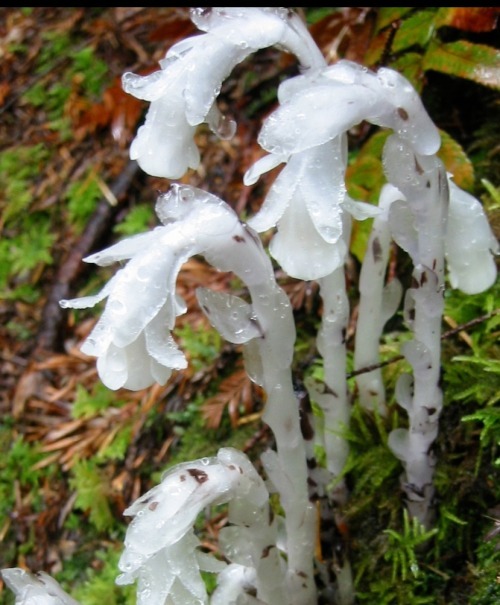
The real vampire plant is actually Indian Pipe, which lacks chlorophyll and sucks out nutrients from photosynthetic trees, meaning they can grow in dark places without much trouble. They look badass as well.

this is the coolest thing, because every plant is connected to every other plant by underground fungi! scientists now hypothesize that fungi actually evolved long before plants, so plant root systems evolved with fungi that were already in the soil. fungi aren’t just useful for the survival of plants, they are essential for the survival of most vascular plants! (vascular plants = those with root structures)

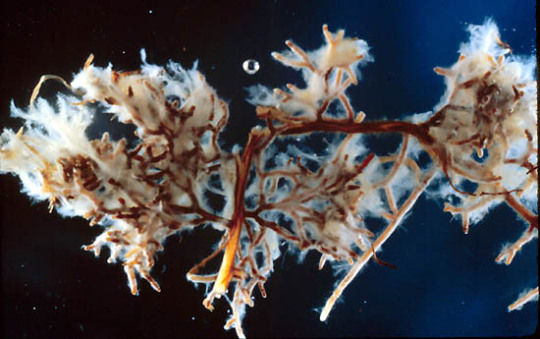
networks of fungi under the ground can cover miles and miles, and each fungus sends out very long branches, called hyphae. these hyphae can surround the root tips of a plant (these are called ectomycorrhizae, because ecto = outside, myco = fungus, rrhizae = root), which looks something like this:

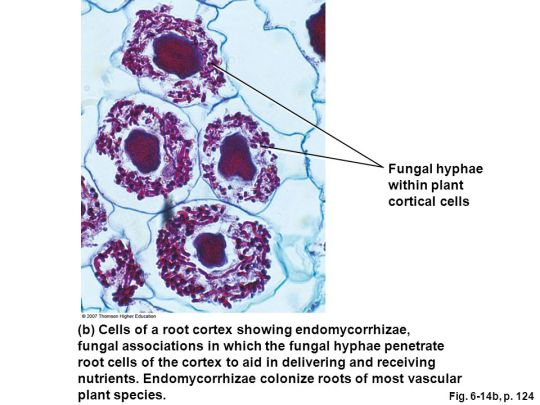
(picture source) alternatively, plant roots can be colonized by endomycorrhizae (endo = inside), which are WILD, because they essentially just bust through the plant cell walls and, like, chill directly inside of the root cells? like HI here we are we’re moving in now! that looks like this, on a cellular level:

(picture source) despite the occasional door-busting, this is a good, codependent relationship for both parties, because plants provide the fungi with sugars and energy, while fungal networks can grow even farther than plant root networks, so they transport essential nutrients to the plants as well as helping the roots to gather enough water. fungi are also the world’s greatest decomposers, and break down rotting organic material in the soil to increase the amount of carbon surrounding the root networks!

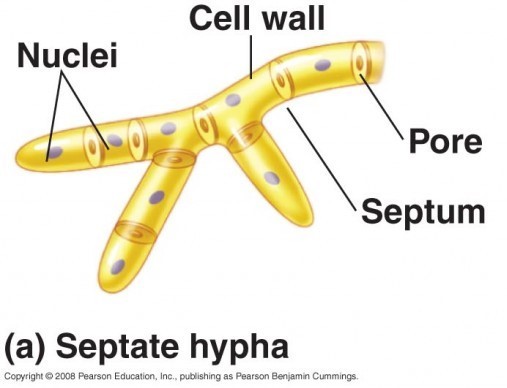
fungi are uniquely disposed to transport materials and to communicate over long distances because they have a super cool cellular structure! so fungal hyphae are only sort of composed of individual cells, but they’re cells with serious boundary issues. most species of fungi have septate hyphae (septum means boundary or partition), where individual cells have dividers between them, but these dividers have, like, GIGANTIC ass holes in them. the concept is kinda like this:

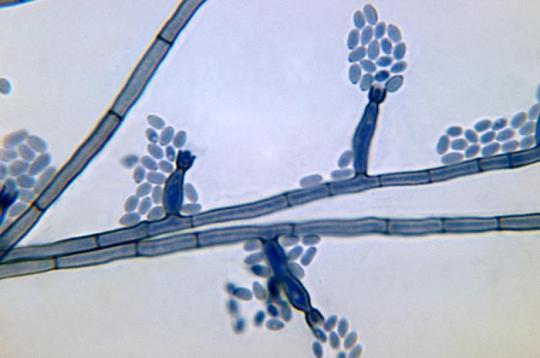
(picture source) these pores are so ENORMOUS that they can fit entire organelles through them! so one cell can just pass its entire nucleus or mitochondria through a pore to its neighbor, which is WILD! you can literally see these septa when you look at fungi under a microscope, like look at this beautiful bullshit!

(picture source) something like 90% of vascular land plants are colonized by mycorrhizae, so when you are standing outside, know that literally every plant around you, every blade of grass beneath you, is connected to every other plant by a vast network of fungal friends, roommates, and helpers! sometimes a SINGLE fungus will be connecting all of these plants to one another! ALL THE PLANTS ARE HOLDING HANDS.

there are these incredibly intimate, cooperative relationships going on beneath your feet that allow plants to help each other and communicate with one another (or compete with one another), and there is NO WAY that we would have enormous trees like we do without fungi to help them expand their reach and weather different soil conditions! the plants are talking to one another, y’all, and we’re the only ones who can’t hear them.

@pacificnorthwestdoodles !!!!

Indian Pipe/Ghost Flower, 
Monotropa uniflora,  grows near me and folks at my old college campus would raise all heck if folks tried to dig/transplant since it had a symbiotic relationship that was severed by being dug up.

There’s several that grow near trees in the college’s parking lot.


Monotropa uniflora (Monotropa  – once turned; uniflora
– one  flowered) ranges in height from 10 to 30 centimeters. The entire
plant is a  translucent, “ghostly” white, sometimes pale pinkish-white
and commonly has  black flecks. The leaves are scale-like and flecked
with  black on the flower stalk (peduncle). As the Latin epithet uniflora
implies, the stem bears a single flower. Upon emerging  from the
ground, the flower is pendant (downwardly pointed). As the anthers and  
stigma mature, the flower is spreading to all most perpendicular to the
stem. The  fruit is a capsule. As the capsule matures, the flower
becomes erect (in line  with the stem). Once ripened, seed is released
through slits that open from the  tip to the base of the capsule. The
plant is persistent after seed dispersal.”– US Forest Service

“ Without chlorophyll, indian pipe is one of around 3,000 species of
non-photosynthetic flowering plants worldwide. Although many
heterotrophic plants (those that lack the ability to synthesize energy
independently) are parasitic on other plants, most are actually
parasitic on fungi. M. uniflora is one of these; it depends on
fungi in mycorrhizal relationships with other plants for its nutrients.

Mycorrhizal fungi typically carry on symbiotic relationships with host
plants, exchanging nutrients in a way that benefits both organisms.
However, when the fungi are being parasitized by plants like the indian
pipe, they are forced to obtain additional carbon from the host tree and
pass it along to the parasite tapping into their mycelium.           

This carbon pathway can be revealed by exposing the host
tree to carbon dioxide containing a radioactive carbon isotope. The tree
will photosynthesize the radio-tagged CO2 into sucrose, which travels
to the roots of the tree. The fungus (usually a russula or lactarius
mushroom, in this case) then absorbs some of the tree’s sugars in
exchange for aiding the tree in absorbing water and other essential
minerals.

Once inside the fungus mycelium, the sucrose is converted into
trehalose or sugar alcohols. Indian pipe engages in a false mycorrhizal
relationship with the fungus, enabling it to siphon off carbon and
energy. The radioactively tagged carbons appear in energy molecules in
the indian pipe, confirming the transfer.“ –Mountain Lake Biological Station

*All of the information about mycohrrhizal relationships has wonderfully been explained above by @vulpes–vulpes and @clarz

Hello, please tell me about corn genetics

botanyshitposts:

botanyshitposts:

maize. 

maize is so fucking weird. like i can’t even cover it in one post so i’m just gonna focus on one of the LARGEST reasons it’s so fucked up in this post so buckle in babes it’s time for a wild ride

to understand maize genetics on a fundamental level, we have to understand the work of Dr. Barbara McClintock, a brilliant botanist who dedicated her life to how fucked up corn is while simultaneously never being taken seriously because she was a woman. McClintock noticed a few things while studying maize in the early 1940s. as you might know, maize doesn’t always look all yellow; sometimes the kernels are colored differently, like this: 

image

well yeah about that, she started noticing correlations in how the kernels were colored based on certain cases of the genes (imagine them as sections of DNA) she was looking at being rendered nonfunctional (or being “broken”).

for instance, lets say we breed a maize plant thats supposed to have only purple cobs, but when it grows up, the cobs are a different color entirely, or patterned differently, or completely different from what we were expecting. this happened a lot to McClintock. like, constantly. after testing the DNA of the plant, she would find that the reason the plant didn’t bear purple cobs was because of other genes randomly teleporting into the middle of the gene she was testing for. so our purple maize plant wouldn’t make purple cobs because some random ass shit inserted itself in the actual fucking middle of the ‘make purple pigment’ gene, causing it to ‘break’. we now know these teleporting little shits as “transposons”, and they’re a normal thing that casually happens IN ALL LIVING THINGS. but they didn’t know that in the 1940s. 

so not only did McClintock have random shit jumping into other random shit, but she had a REALLY hard time on her primary project of mapping the maize genome (the act of building a basic outline of which gene goes where on each chromosome) because it seemed like no matter what gene she was looking at, it would be in a different place in the genomes of all her plants (it should be noted that as we know them to be, many genes really are stable and stay in their same positions consistently through a species. for instance, lets say that there’s a gene on your 5th chromosome that codes for eye color. although your eye color may be different than the person next to you, their eye color gene is still located on the 5th chromosome; the code is just different. in McClintock’s case, NOTHING was staying consistently ANYWHERE between multiple samples of corn). 

so McClintock was like, “hey uhhhhh these genes can jump wherever and the genome isn’t actually a stable consistent thing that we’re born with like we’ve thought it was up until now. like it turns out an organism’s genes can change over the course of its life responding to different environmental pressures, and part of how DNA accomplishes this is through making these weird jumping genes change positions when the organism is exposed to certain things.” 

this was a BIG mistake. she continued to publish her results for the next 15 years until she got so much hate she had to stop publishing the evidence she found not only for the existence of transposons, but her theories as to why they were there and what purpose they serve. other scientists in her (primarily male) field of experimental genetics REFUSED to believe this from her until nearly two decades later, when two male scientists- fellow biology students may recognize the names Francois Jacob and Jacques Monod, who worked with confirming the regulation of the lac operon and are still considered the fathers of epigenetics despite you know, not actually being the fathers of epigenetics since she did it twenty years earlier and i personally refuse to worship their shitty ass milk triumph- confirmed that genes could be, you know, regulated, and that the genome could be changed over the course of your life and that transposons were VERY MUCH possible and were also rediscovered in the following decade in similar encounters. anyway she casually won the nobel prize for her work in 1983, literally 40 years after she discovered it when everyone realized that she had been right all along and that they’d been belittling her and shitting on her for decades over it lol. 

anyway, all that aside: why is corn weird? why did it take until literally 2009 for us to map the maize genome for the first time? 

well here’s the kicker: 

the maize genome is 70-85% transposons or transposon-like elements depending on which variety you choose

70-85% of the genome of maize, in it’s natural form, literally does not stay in one place between generations. it just doesn’t. it fumbles around and breaks shit CONSTANTLY when exposed to different things. its an actual trainwreck in a constant state of slamming shit into other shit until shit happens. like given, plants in general have weird genomes and like, i can understand that and accept that, but this is actually fucking ridiculous. to put this in perspective, roughly 44% of the human genome is transposons or transposon-like elements. take that amount and double it and you have about the same amount of genomic chaos as maize. i’ve said it before and i’ll say it again: 

the maize genome is a goddamn build-a-bear workshop and it scares me

EDIT: @thecrystalmadness brought up a good point in the tags that the source study for the percentage of the human genome statistic points out that although 44% of the human genome is structurally transposons, less that 0.05% are considered by the study to be active elements, which reflects how I need to be sure I’m reading all the sources I reference, not just the plant-related ones is a really interesting idea when we think about the maize genome; maybe the reason the maize we look at now is remotely consistent is because many of them have long since been disabled or silenced? 

I tried digging a bit to see if I could find a similar study on general activity for Maize and didn’t find anything outside specific studies on families of genes, but let’s not forget that the maize genome has an entire database just for its transposons. In the intro, the database notes that the Maize is, “recognized as having the most dynamic TE component,” of most, if not all, higher eukaryote organism and that “As such, it is the organism of choice for understanding how TEs contribute to gene and genome evolution”. so whatever that number of active elements is, it’s significant enough to have affected how the species responds to many different kinds of evolutionary pressures and is indeed quite, how do u say, fucking high and very intimidating  

sparklenaut:

image
image
image
image
image
image

Starchaser is my very first digital comic, and it was originally published in Lilies Anthology volume 2, an LGBT women’s romance anthology featuring a diverse cast of queer creators. Starchaser is a bittersweet sci-fi story about fleeting emotions, falling in love with the feeling of being in love, and the courage that lies in letting go. 

Today on Valentine’s Day I wanted to share it for free with everyone who has stayed with me through the years, as well as any new readers who are interested in seeing my work! Thank you so much for your relentless support, I love you! 

Join us in celebrating wlw comics and support the creators of Lilies Anthology by buying a physical copy or downloading a free digital pdf  here!

If you want to see more stories like Starchaser, I have now launched a brand new blog where all my free-to-read projects will be posted in one place! Find more comics by me at @sparklenautcomics​!

The Birth of a New Island

npr:

nasa:

image

In late December 2014, an underwater volcano in the South Pacific Kingdom of Tonga erupted and sent a violent stream of steam, ash and rock into the air. The ash plumes rose as high as 30,000 feet (9 kilometers) into the sky and diverted airline flights.

Most new oceanic islands often wash away quickly within a few months. The island doesn’t have an official name, and is referred to as Hunga Tonga-Hunga Ha’apai after two older islands to either side.

But this island was different. One of our satellites that detects volcanic eruptions alerted our scientists who were very excited because this type of explosive, undersea eruption is rare. In fact, the new Tongan island is one of only three of this kind of volcanic islands in the past 150 years to emerge and survive. It’s now three years old.

Zooming in from Space

image

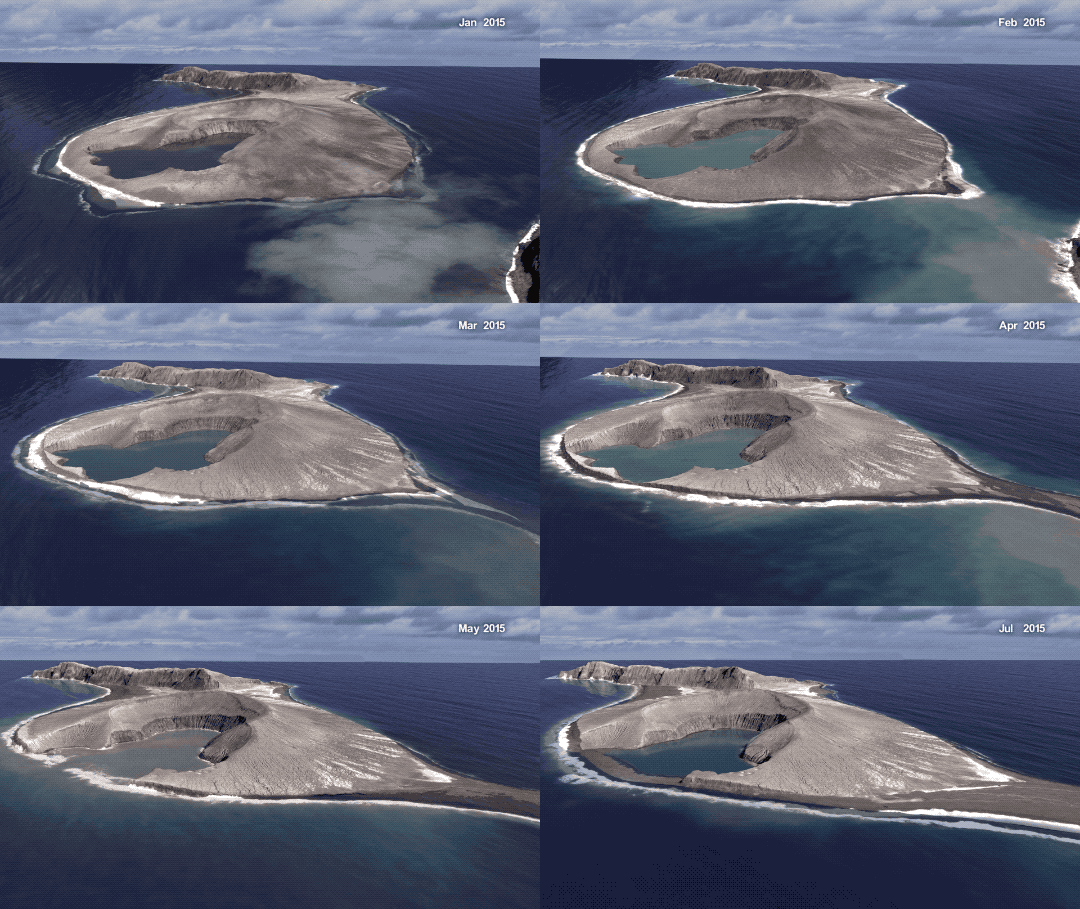
The baby island is also the first of its kind to emerge in the modern satellite era. This is really important since it’s difficult to send our researchers the South Pacific every month to see how the island has changed – which it did very rapidly, especially in the first six months. But satellites in space delivered monthly views which we used to make these high resolution, 3-D topographic maps. With these maps, we tracked the early life and evolution of the island in unprecedented detail.

image

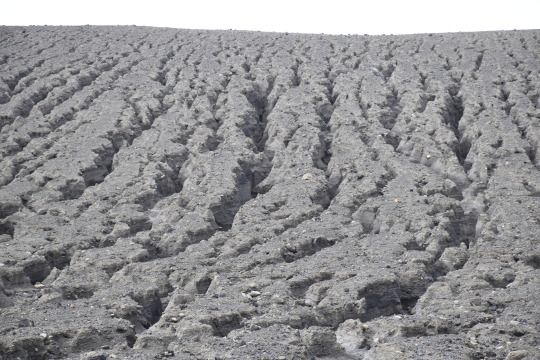
In April 2015, we watched an isthmus bridge begin forming from the new island to the older island neighboring it to the east. Soft volcanic material, especially on the island’s southern side, was eroded by the ocean and deposited on the tail end, which grew and grew till it reached the other island. It’s about 1600 feet (500 meters) across, or the length of 5 football fields.

image

The erosive forces of the ocean broke down the southern wall of the crater lake in May 2015. We thought this might mean that the island wouldn’t last much longer because the ocean could now attack the interior of the island’s tuff cone. But in June, a sandbar formed, closing off the lake again and protecting the interior. The sandbar has been in place ever since.

Monitoring these changes of both erosion and growth, we now believe that the island will last from between 6 to 30 years!

Terranauts!

image

Why has the island survived for three years? What makes eroding it away harder than for other blink-and-you-miss-it oceanic islands that disappear into the sea after a few months? To answer these questions, we need rock samples.

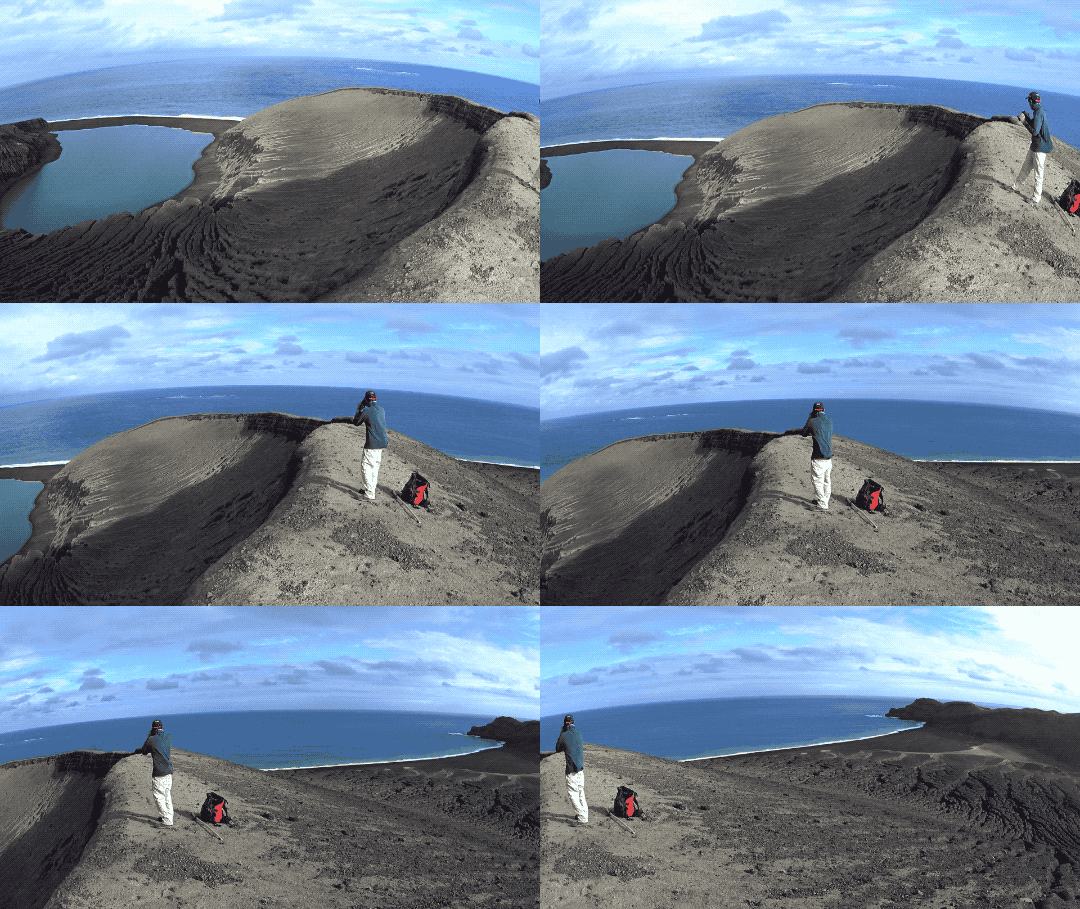
Working with the Tongan government, we recruited two French citizens sailing around the world who were in Tongan waters in June, 2017, to go to the new island on our behalf. We treated them like astronauts and gave them instructions to take pictures and samples of the volcanic rocks at locations we could see from space along the coasts, the interior of the crater lake, and from the top of the tuff cone.

image

They did a fantastic job documenting each sample and where it came from, and then mailed the box of rocks back to our team at our Goddard Space Flight Center in Greenbelt, Maryland, where they are currently being analyzed. We believe that after the eruption, warm seawater mixed with volcanic ash to chemically alter it so that when it hardened into rock it was a tougher material. We’re excited to see if the rock samples confirm this.

From Earth to Mars

image

Link: https://svs.gsfc.nasa.gov/11372

Did these Martian volcanoes form in an ocean or lake? If they did, wet environments such as these combined with heat from volcanic processes may be prime locations to search for evidence of past life. We may not know until we arrive on the red planet, but by studying Earth’s landforms, we’ll be better prepared when we do.

Make sure to follow us on Tumblr for your regular dose of space: http://nasa.tumblr.com.

Happy Birthday, baby island! -Emily