tumble dot hell is wild and i am So Weary so here’s a reminder that poaching any organism is bad and u should not do it but poaching an endangered organism is even worse and you should really, especially not do that please and also posting about an endangered organism is not an immediate endorsement for poaching them and oh my god lads 🅱️lease im begging u just use ur heads….you are intelligent and capable people…..use common sense……
And there’s such a thing as????? Nursery produced plants???? Like how is that option forgotten on such people??? Y’know how many endangered species (as well as some officially declared extinct-in-the-wild) are COMMON IN THE NURSERY PRODUCED TRADE???
I can’t list them all but the ones off the top of my head are various carnivorous plants, orchids, cacti (I’m even thinking of some Canary Island plant species but icr the names), wollemi pine. But the grandest example I can think of Ginkgo. Yes you read that right; ginkgo, the common tree you see everywhere in cityscapes is considered endangered by the International Union for the Conservation of Nature Red List of Threatened Species, because it is so scarce in its wild habitat.
So how can this be??? With the number of trees you get from the nursery surely it should be extinct cause we’ve poached them all right?? WRONG!!!!! Because nurseries have done their own production of the tree; seed-grown, graftings, buddings, no longer ever taken from the wild (poaching still exists for ginkgos if you can believe it but is greatly overshadowed by the nursery trade’s work of mass producing ginkgo trees on a large scale, it’s just… more productive long-term to be growing them yourself over taking ones from the wild).
You don’t have to poach plants to appreciate them, endangered or otherwise. Hell you don’t even have to grow them (cause hell not all plants CAN be grown easily), you can still appreciate them. You don’t appreciate the beauty of a Siberian tiger in the wild and take it as an endorsement to hunt them all down or (god forbid) keep them as pets right? Just because its a plant doesn’t mean its not a similar thing.
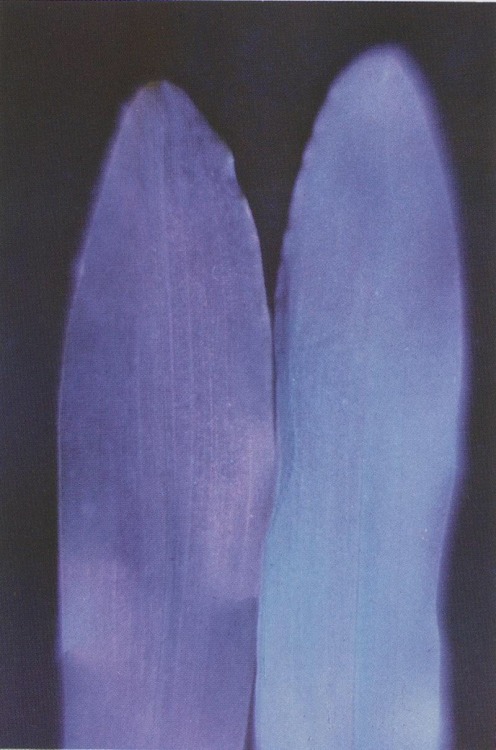
ok like y’all know I love plant mutations and love reading about them but a few days ago I was reading a book on corn mutants at 4am and I found out about glow corn and still haven’t recovered
1. this isn’t gmo. they didn’t intend for this to light up under UV light. it’s like. a casual genetic mutation on chromosome 9 that causes some chemicals to degrade improperly and the products just happen to glow
2. apparently like the tassels glow too but the seedlings only glow if the plants are homozygous recessive (if both parents pass on the glow gene)???
3. so far the words “May be detected by odor” referring to glowing corn is the most ominous sentence I’ve ever heard in a scientific context and also I have no idea what smell they’re referring to and somehow that makes it worse
4. i literally have so many unanswered questions like how did they find this??? do the ears glow too?? how bright is the glowing??? what do u mean the male flowers glow??? what smell and why does the corn smell???? how old do the plants have to be before they start glowing???? what’s happening…..what dimension am I in
maize is so fucking weird. like i can’t even cover it in one post so i’m just gonna focus on one of the LARGEST reasons it’s so fucked up in this post so buckle in babes it’s time for a wild ride
to understand maize genetics on a fundamental level, we have to understand the work of Dr. Barbara McClintock, a brilliant botanist who dedicated her life to how fucked up corn is while simultaneously never being taken seriously because she was a woman. McClintock noticed a few things while studying maize in the early 1940s. as you might know, maize doesn’t always look all yellow; sometimes the kernels are colored differently, like this:
well yeah about that, she started noticing correlations in how the kernels were colored based on certain cases of the genes (imagine them as sections of DNA) she was looking at being rendered nonfunctional (or being “broken”).
for instance, lets say we breed a maize plant thats supposed to have only purple cobs, but when it grows up, the cobs are a different color entirely, or patterned differently, or completely different from what we were expecting. this happened a lot to McClintock. like, constantly. after testing the DNA of the plant, she would find that the reason the plant didn’t bear purple cobs was because of other genes randomly teleporting into the middle of the gene she was testing for. so our purple maize plant wouldn’t make purple cobs because some random ass shit inserted itself in the actual fucking middle of the ‘make purple pigment’ gene, causing it to ‘break’. we now know these teleporting little shits as “transposons”, and they’re a normal thing that casually happens IN ALL LIVING THINGS. but they didn’t know that in the 1940s.
so not only did McClintock have random shit jumping into other random shit, but she had a REALLY hard time on her primary project of mapping the maize genome (the act of building a basic outline of which gene goes where on each chromosome) because it seemed like no matter what gene she was looking at, it would be in a different place in the genomes of all her plants (it should be noted that as we know them to be, many genes really are stable and stay in their same positions consistently through a species. for instance, lets say that there’s a gene on your 5th chromosome that codes for eye color. although your eye color may be different than the person next to you, their eye color gene is still located on the 5th chromosome; the code is just different. in McClintock’s case, NOTHING was staying consistently ANYWHERE between multiple samples of corn).
this was a BIG mistake. she continued to publish her results for the next 15 years until she got so much hate she had to stop publishing the evidence she found not only for the existence of transposons, but her theories as to why they were there and what purpose they serve. other scientists in her (primarily male) field of experimental genetics REFUSED to believe this from her until nearly two decades later, when two male scientists- fellow biology students may recognize the names Francois Jacob and Jacques Monod, who worked with confirming the regulation of the lac operon and are still considered the fathers of epigenetics despite you know, not actually being the fathers of epigenetics since she did it twenty years earlier and i personally refuse to worship their shitty ass milk triumph- confirmed that genes could be, you know, regulated, and that the genome could be changed over the course of your life and that transposons were VERY MUCH possible and were also rediscovered in the following decade in similar encounters. anyway she casually won the nobel prize for her work in 1983, literally 40 years after she discovered it when everyone realized that she had been right all along and that they’d been belittling her and shitting on her for decades over it lol.
anyway, all that aside: why is corn weird? why did it take until literally 2009 for us to map the maize genome for the first time?
70-85% of the genome of maize, in it’s natural form, literally does not stay in one place between generations. it just doesn’t. it fumbles around and breaks shit CONSTANTLY when exposed to different things. its an actual trainwreck in a constant state of slamming shit into other shit until shit happens. like given, plants in general have weird genomes and like, i can understand that and accept that, but this is actually fucking ridiculous. to put this in perspective, roughly44% of the human genome is transposons or transposon-like elements. take that amount and double it and you have about the same amount of genomic chaos as maize. i’ve said it before and i’ll say it again:
the maize genome is a goddamn build-a-bear workshop and it scares me
EDIT: @thecrystalmadness brought up a good point in the tags that the source study for the percentage of the human genome statistic points out that although 44% of the human genome is structurally transposons, less that 0.05% are considered by the study to be active elements, which reflects how I need to be sure I’m reading all the sources I reference, not just the plant-related ones is a really interesting idea when we think about the maize genome; maybe the reason the maize we look at now is remotely consistent is because many of them have long since been disabled or silenced?
I tried digging a bit to see if I could find a similar study on general activity for Maize and didn’t find anything outside specific studies on families of genes, but let’s not forget that the maize genome has an entire database just for its transposons. In the intro, the database notes that the Maize is, “recognized as having the most dynamic TE component,” of most, if not all, higher eukaryote organism and that “As such, it is the organism of choice for understanding how TEs contribute to gene and genome evolution”. so whatever that number of active elements is, it’s significant enough to have affected how the species responds to many different kinds of evolutionary pressures and is indeed quite, how do u say, fucking high and very intimidating
dude…….i love cephalotus follicuarus a TON and its one of my fave pitcher plants (lives on the southwest australian coast) but my overall fave from ur region are the pygmy sundews…… like look atthem……
many colleges don’t have a specific botany program anymore!! usually, you get a biology degree through a ton of plant classes (what i’m doing). botany exclusive degrees are more of a grad school thing, although some colleges still have botany exclusive programs.
note: botany is different from horticulture. botany is the study of plant science, horticulture is applied botany. a horticulture program will be focused on plant science applications, usually in farming, while a botany program will focus more on the research/grad school aspects. at least that’s in my experience!
ive talked on here before about how nepenthes (asian carnivorous pitcher plants) are dioecious, meaning that the individuals are either male or female; this big friend just bloomed in the greenhouse!! look at his perfect big flower vine im crying
shoutout to the dude in the biology building who walked down the hallway carrying three (3) entirely intact 5 foot tall corn stalks rooted in a gallon ziplock bag, looked around confusedly, and walked back the way he came
ive talked on here before about how nepenthes (asian carnivorous pitcher plants) are dioecious, meaning that the individuals are either male or female; this big friend just bloomed in the greenhouse!! look at his perfect big flower vine im crying
for those asking how to tell them apart:
-this species will have one or the other per individual plant, and will often stay with this sex consistently throughout their lives in the wild.
-the Nepenthes family is one of only 6% of the plant kingdom to be completely male or female; other plants, as you can probably guess, are both sexes at once, but some species can be male, female, both, or neither!
-what makes an individual one sex or another is still being studied, but again, these plants can be very elastic with their sex in cultivation and may go back and forth between male and female in their lifetime.
-we dont know why nepenthes became dioecious?? like we know from fossilized pollen grains about when it happened, but we don’t know why or even how yet (i.e. the selective pressure that made them change??)
-in the wild, being only two sexes can put them at a special risk when habitat change and poaching happens, because if there’s like, 25 males and only 2 females in an area, that population is subject to inbreeding and can dwindle really quickly.
tl;dr: plant genders are weird and they just kinda do whatever





 Kihaku-Gato's Garden Blog (tumblr import)