
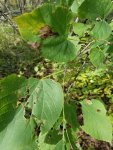
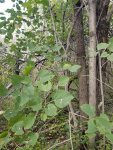
A Linden or maybe basswood tree? The leaf side makes me think Basswood.
I don’t get much opportunity to ID trees in the wilds normally. Its good practice to clear off the plant ID rust.
A Linden or maybe basswood tree? The leaf side makes me think Basswood.
I don’t get much opportunity to ID trees in the wilds normally. Its good practice to clear off the plant ID rust.
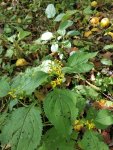
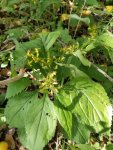

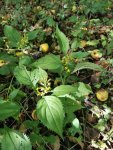
I called this Woodland Goldenrod in my tweets but that’s actually the wrong common name for this species (though I was correct for its habitat preference); they’re in fact Zigzag/broadleaf goldenrod (Solidago flexicaulis).
Short stature, broad toothy leaves, and small clusters of yellow flowers, it is almost a day-and-night comparison to the field goldenrods that thrive away from the forests.
This is actually the first time I’ve seen this species in the local woodlands, but at the same time I am almost never in the woodlands in the autumn season, so that’s likely in play. Granted, I only saw 2 different clumps of it in my entire forest walk.
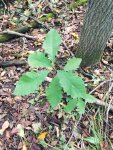
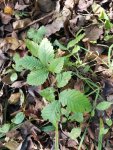

3 different deciduous tree sapling species; a species of white oak (? burr oak?, you’ll see its momma in a different post), Elm, and Sugar Maple.
They’ll probably stay small till the forest canopy opens up for some tasty sunlight for them to bulk up on.
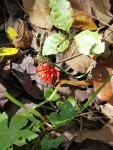
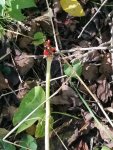
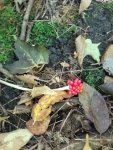
Wild Jacks (Arisaema triphyllum)
Looks like the wildlife are gleaning off some of their berries. My garden ones (fortunately) never get eaten by wildlife. With the bumbercrop at home I left the forest’s Jacks be.

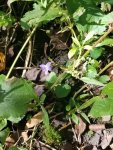
Wild violet in flower in September??? Thought such oddities only happened to non-native floral shrubbery.
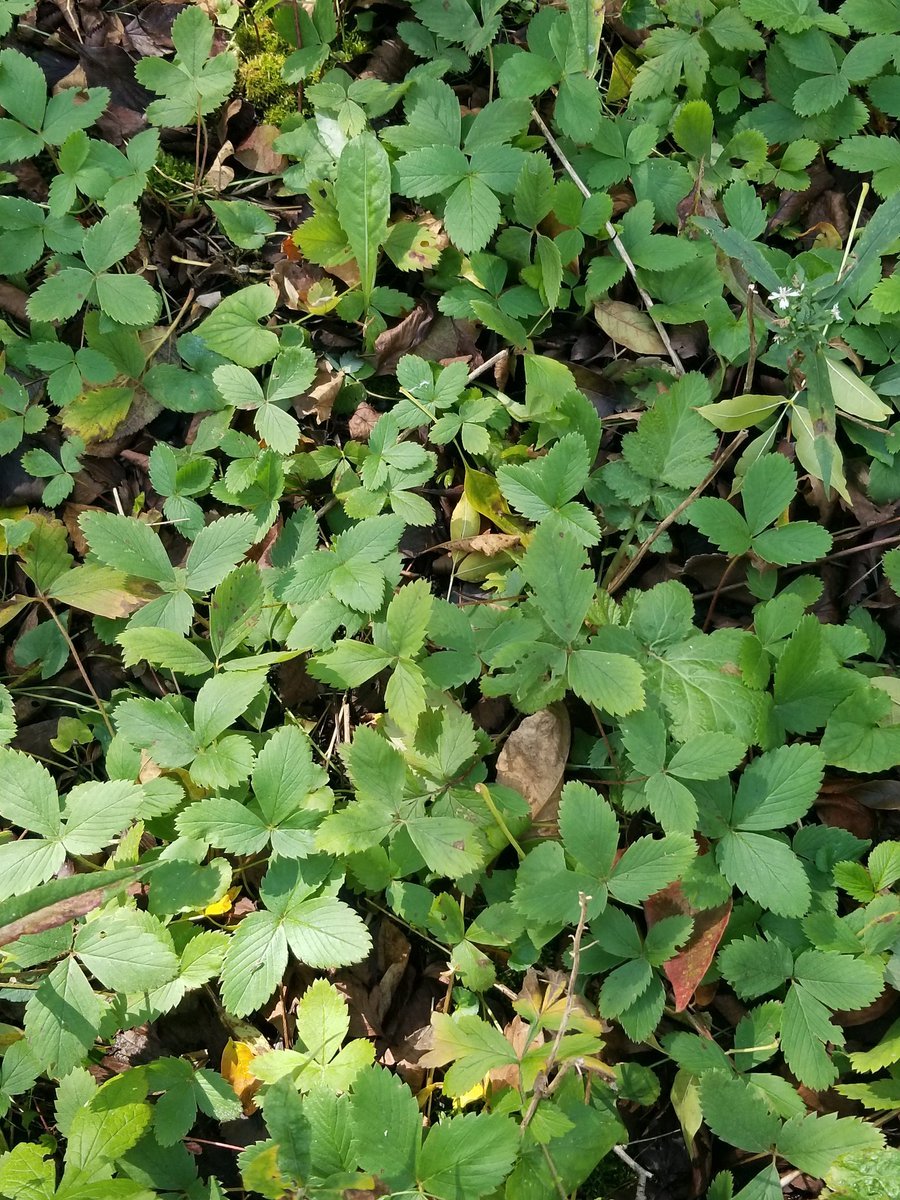
Y’know how weird it is to see areas of woodlot carpeted with primarily strawberry plants? Trippy it be.
I really want to go back to this forest during their flowering season and see if I can ID them as Wild strawberry (Fragaria virginiana) or Woodland strawberry (Fragaria vesca).

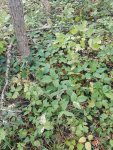


Both Virginia Creeper (Parthenocissus quinquefolia) and Poison Ivy Toxicodendron radicans) thrive in this forest. Though the Virginia Creeper is far scarcer, with only one location where I saw a population. Poison Ivy was hiding in almost any nook where you could have your guard down. Luckily climbing poison ivy I only saw in 3 different locations.
Interesting how the Virginia Creeper is ahead of the Poison Ivy for the autumn colours though.
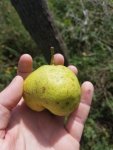
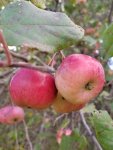
Wild pear(?) and wild apples. Them and the hawthorns are the main trees of the south/east of this woodlot, and seem to be that their oversurplus of fruit is favoured food for the wildlife; I’m sure the flock of 20(!) wild turkeys I saw at the end of my walk were enjoying them along with the leftover corncobs in the fields.

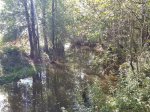
Same part of the creek photographed from the opposite sides of it (notice the trees with the distinctive curve from the base of their trunks). Basically discovered the south side of the creek would lead me away from the forest so had to trek ALL THE WAY back to the road the retrack my path from the north side.

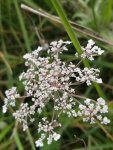
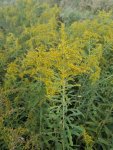
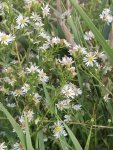
The sunnier side of the creek (as well as the untouched large meadow which I tragically did not photograph) had a lot of the standard wildflowers; New England Aster, Poison Hemlock (? I was gonna ID as wild carrot but then went “wait a minute wild carrots don’t like wet habitats”), Goldenrod, and white wild aster.
 Kihaku-Gato's Garden Blog (tumblr import)