kihaku-gato:

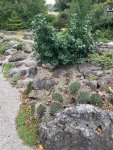
A bold boi Opuntia in fruit in the rock garden of Cuddy Gardens.

The other Opuntia species/cultivars in this garden pale in comparison to this variety. The native O. humifusa does not have THIS kind of size or boldness. Amazing such a bold variety/species is winter hardy in Canada.

“But Gato, did you grab any of the Opuntia fruit?”

Sad to say my self preservation from their glochids strongly overrides my seed harvesting/germinating obsessions. Prickly oriental poppies will be enough pain in my future in my greenhouse.

One of the biggest annoyances with being a houseplant/gardening enthusiast is having to use so much restraint to hold back the collectors urges. With me getting back in the houseplant-care game again my brain keeps going on occasion like ASDGJKASDJLASDFJKGSADKLGD NEED MORE PLANTS NEED MORE PLANTS, WE MUST COLLECT THE LAST COOL ONES WE WANT NOWWWWW

Like jeeze chill brain we only JUST got back into the plant-care groove at least wait a season/year before going that rabid again, besides we have limited growing space now ya doof.

elysium-continuum:

Okay okay I know this looks bad but hear me out. This scented pelargonium developed what I believe to be a bacterial leaf infection after being treated with neem oil, or being root bound aaaaand overwatered (most of this was not my fault). As far as I could tell the only way to save it was remove the infected leaves as soon as possible.

In my defense I have no idea what I’m doing and only have random google searches to go by.

That sounds like a reasonable excuse.

Send help.

I’ve seen Pelargoniums in far worst conditions for the indoor overwintering (by seen I mean experienced; mine). Yours looks fine despite what its gone through. Just treat it like a succulent during its indoor overwintering, rotate it as it stretches to the windows, and otherwise you should be fine, even if it may get a lil leggy by the time spring rolls around.

The skeletons are transfixed with arrows, and the heads are located in a nearby village, hanging in, of course, the headman’s compound, with black orchids growing from them. I don’t remember the moral lesson the author intended with his tale, but the memory has always comforted me in the knowledge that orchids can grow anywhere.

Orchids Simplified, An indoor gardening guide by Henry Jaworski