


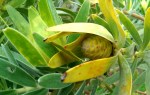
Leucadendron gandogeri, Proteaceae
This contorted, large shrub with curious features is known as the cone-bush and is endemic to South Africa, where it is one of the Proteaceae characteristic of the fynbos, or belts of shrubby vegetation or heath growing in a Mediterranean climate in the south-western part of the country, a winter rainfall area.
In its natural habitat, the large yellow inflorescences of this plant are visited and pollinated by beetles, while other species of cone-bush rely on rodents, birds or simply the wind. The resulting woody infrutescence the plant’s common name refers to is similar to a cone and contains numerous seeds, which are dispersed only after fire has scorched it. This ensure the new seedlings will have the best chances at getting established after a wildfire has destroyed the mother plant and the surrounding shrubbery.
Different species of Leucadendron are available as ornamental shrubs or small trees and could fit well in a rocky Mediterranean garden, preferring sandy acidic soils and being drought tolerant when established.
More information and photos of Leucadendron species here.
Photos taken at Glasgow Botanic Gardens
 Kihaku-Gato's Garden Blog (tumblr import)